
Why Social Media Marketing Matters for Home Service Businesses
Social media marketing is how a business uses social platforms to earn attention, build trust, engage customers, and generate leads or sales. For a home service business, the practical starting point is simple:
- Choose one or two platforms where local customers spend time.
- Share useful proof of your work, such as before-and-after photos, short how-to videos, reviews, and team updates.
- Reply quickly to comments and messages.
- Track calls, form fills, website visits, and booked jobs – not just likes.
People spend an average of 143 minutes a day on social media, and more than 5 billion people use these platforms worldwide. That attention is valuable, but it is competitive. Consistent, helpful content gives prospective customers a reason to remember your business when they need a repair, installation, or estimate.
Social media is also a listening channel. It can reveal common customer questions, local concerns, competitor gaps, and feedback about your brand. The goal is not to post everywhere or chase every trend. It is to show up where your customers are, provide real value, and make the next step easy.
I am Rob Humm, a co-owner of Fusion One Marketing who has worked in digital marketing since 2011, helping local businesses connect social media marketing with local search, paid advertising, and lead generation. This guide will break down the basics into clear steps you can use while still running your business.
What Is Social Media Marketing and Why It Matters in 2026
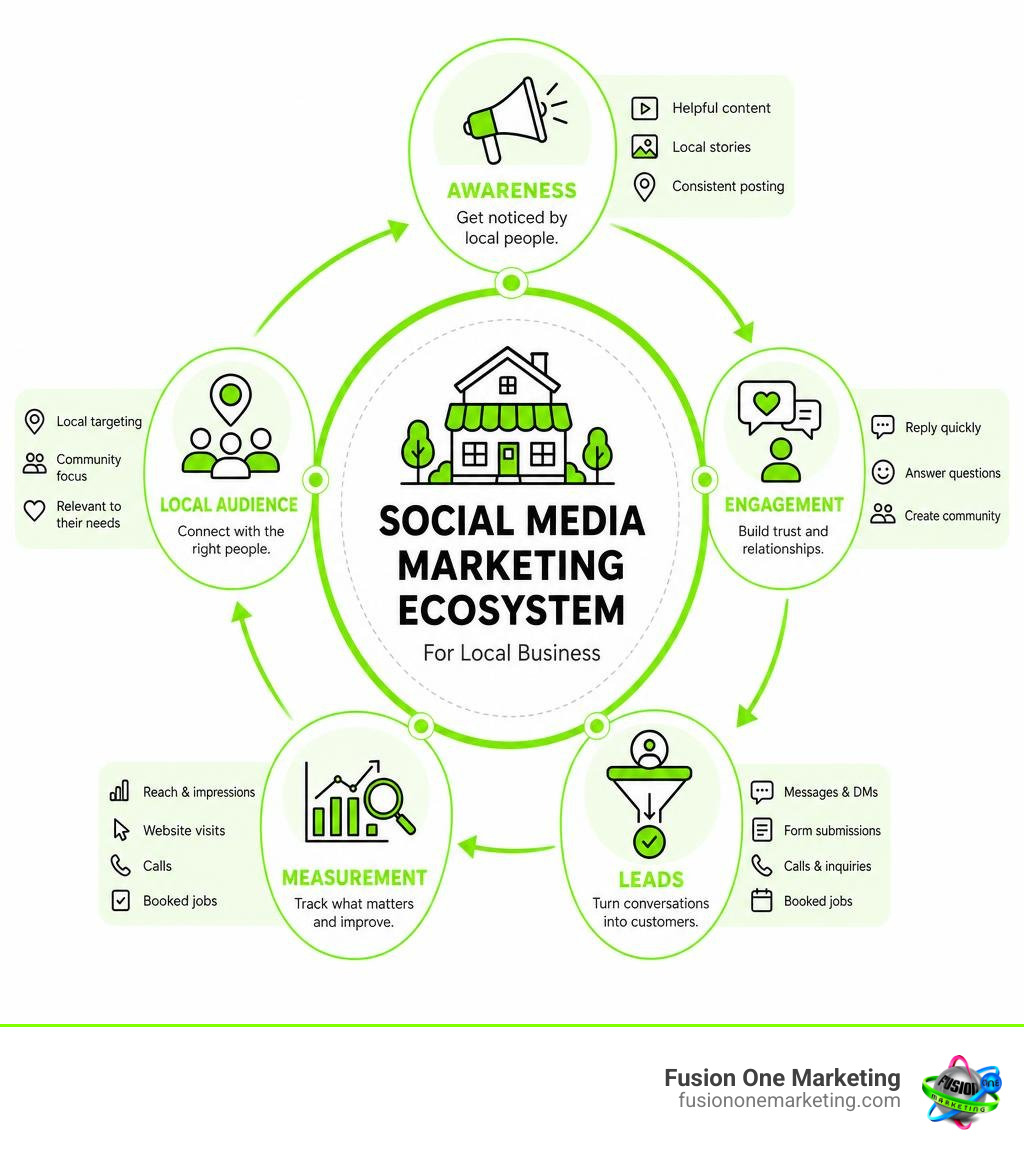
Modern social platforms have shifted from simple digital bullhorns into two-way conversational networks. In 2026, social channels serve as essential spaces for customer service, real-time community interaction, and direct market research. Businesses no longer just broadcast advertisements; they participate in ongoing dialogues.
Research shows that 81% of people believe social media increases brand accountability. When customers have an exceptional experience—or a frustrating breakdown—they turn to digital channels to voice their thoughts. This electronic word-of-mouth (eWOM) acts as a high-impact driver of consumer purchase decisions. In fact, over 80% of consumers use the web to research products and services before making a buying decision, and business retailers have documented up to 133% increases in revenue through strategic social campaigns.
Recognizing this shift, companies treat social networks as foundational tools rather than casual experiments. Social networks deliver rich customer data that reveals buying triggers, sentiment shifts, and seasonal demands. If you want to understand how this fits into daily operations, exploring social media marketing essential business tool concepts will help you build authority without wasting resources. For teams looking to sharpen operational skills, programs like Social Media Marketing: get social with your business provide structured frameworks for establishing a consistent digital footprint.
For local companies, understanding the true purpose of social media for home services makes all the difference. When an air conditioner fails on an 95-degree afternoon or a pipe bursts in winter, homeowners look for reliable professionals they recognize and trust. Social media builds that familiarity long before the emergency happens.
Understanding the Consumer Journey and Social Search
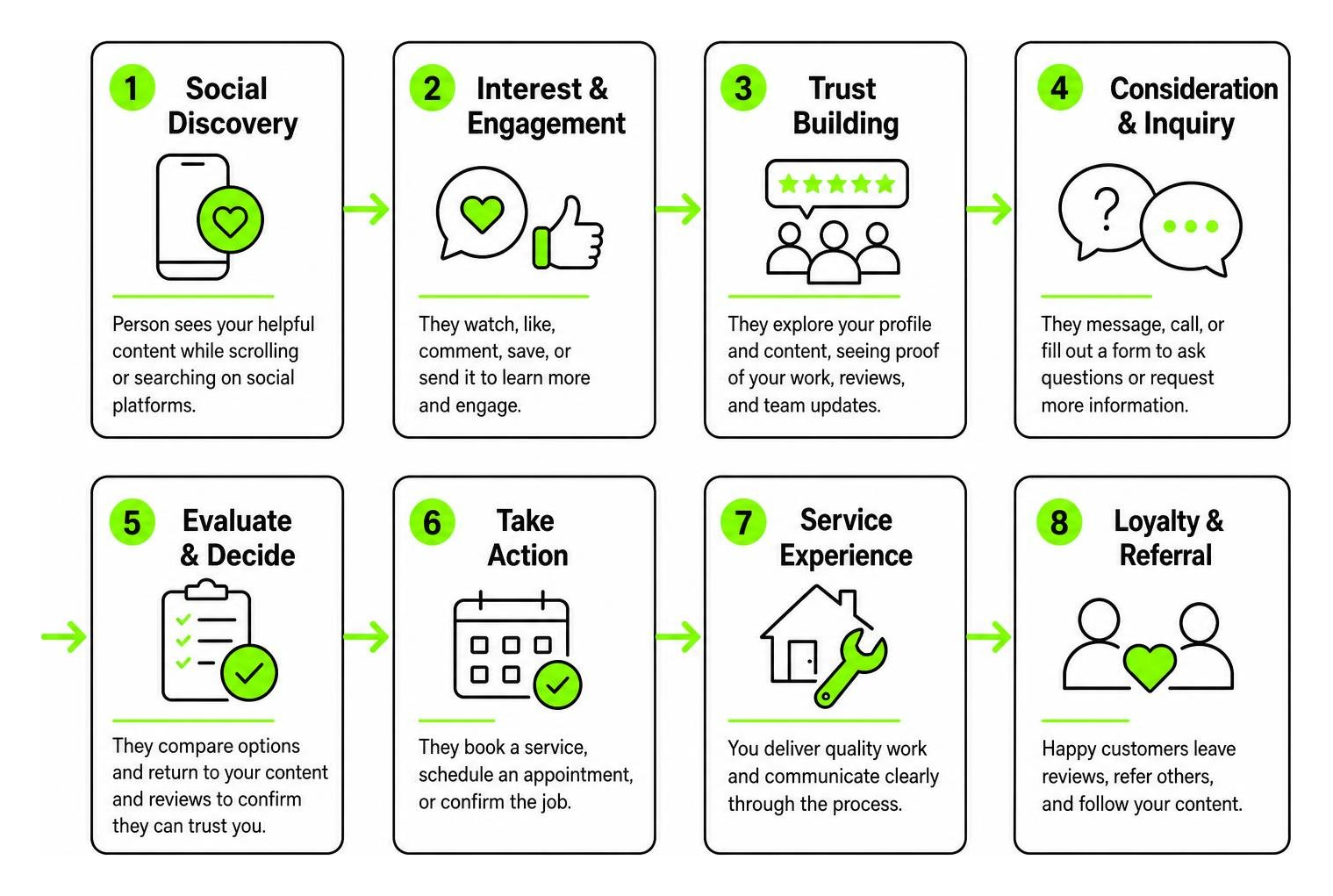
The path from first discovery to a booked service call is no longer a straight line. Modern users do not simply scroll down a chronological feed; they actively use social networks as search engines. Millions of consumers bypass traditional search boxes entirely and type queries directly into TikTok, YouTube, and Instagram to evaluate authentic user experiences and tutorials.
This shift toward social SEO means your profiles, captions, video audio, and on-screen text must reflect the exact terms your target audience uses. When potential clients search for solutions, they want immediate answers rather than generic corporate slogans. As explored in our breakdown on social media and seo part 2, while social shares do not serve as direct Google algorithm ranking factors, the visibility, brand searches, referral traffic, and inbound links generated from social content create significant indirect SEO advantages.
Building a clear buyer persona ensures you address specific consumer questions directly. When a homeowner encounters your step-by-step troubleshooting reel or customer spotlight, it reduces friction, answers objections, and establishes top-of-mind awareness.
Organic Reach vs. Paid Social Media Marketing
A common point of confusion for business owners is knowing when to rely on unpaid posts versus launching paid advertisements. Both serve distinct functions, and a balanced campaign relies on both working together.
| Strategic Dimension | Organic Social Media | Paid Social Media Advertising |
|---|---|---|
| Core Objective | Community building, brand trust, customer care, and organic validation | Rapid audience scaling, hyper-targeted lead generation, and direct conversion |
| Audience Reach | Existing followers, mutual connections, and algorithmic discovery feeds | Precise demographic, geographic, behavioral, and interest-targeted users |
| Cost Structure | Direct time investment and content creation costs | Media budget spend plus creative production and campaign management |
| Speed of Impact | Compounds steadily over months through consistency and engagement | Immediate impressions, immediate click-throughs, and instant traffic |
| Primary Use Case | Testing hooks, establishing authenticity, and nurturing existing relationships | Amplifying proven high-performing content, running retargeting campaigns, and driving special offers |
Organic content serves as your testing ground. It allows you to experiment with messaging, video hooks, and educational topics with zero ad spend. Once an organic post demonstrates strong engagement and positive audience responses, you can allocate paid advertising budget behind it to amplify reach to specific zip codes and target demographics. Combining organic nurture with paid retargeting ensures you capture high-intent users while maintaining an authentic community reputation.
Building an Actionable Social Media Strategy from Scratch
Posting without a clear plan is like playing darts while wearing a blindfold. Throwing random ideas at the wall wastes time and produces unpredictable results. A structured system connects every post directly to measurable business growth.

To build a reliable system, follow this structured 8-step roadmap:
- Establish SMART Business Goals: Define targets that are specific, measurable, achievable, relevant, and time-bound (e.g., generating 15 qualified estimate requests per month via social channels).
- Define Your Target Audience: Profile your ideal customers by age, location, primary pain points, and preferred platforms.
- Conduct Competitor Auditing: Analyze local and national competitors to discover market white space and underserved topics rather than copying their exact formats.
- Determine Channel Roles: Assign specific jobs to chosen platforms based on where your customers spend active time.
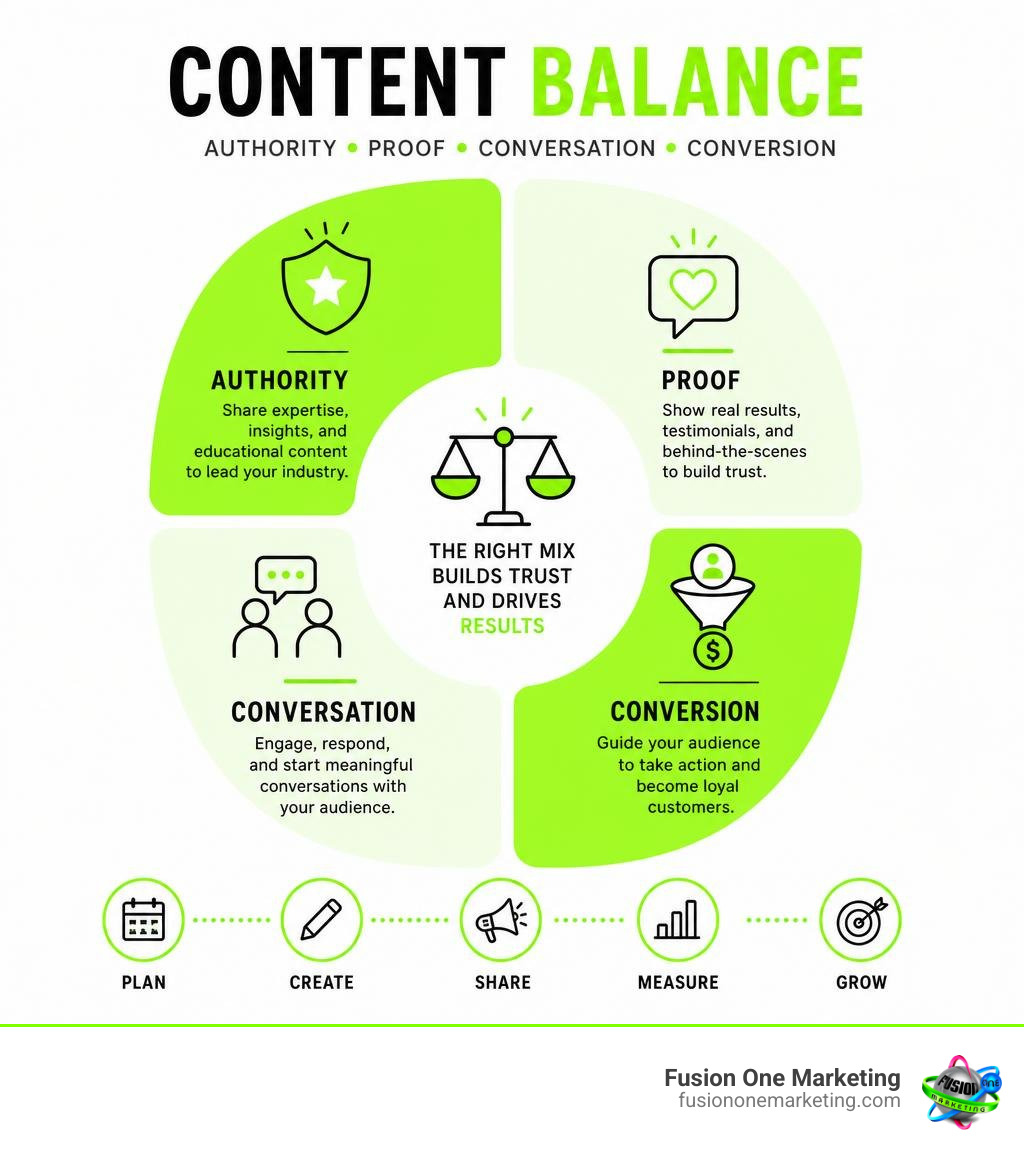
- Establish Core Content Pillars: Build 4–5 foundational themes (e.g., educational tips, behind-the-scenes proof, client reviews, community involvement) to guide daily production.
- Set Up a Sustainable Workflow: Formulate an operational production schedule to batch graphics, videos, and captions without overwhelming your staff.
- Deploy Strategic Paid Amplification: Layer paid budgets onto top-performing organic assets to drive targeted local conversions.
- Analyze and Refine: Review core metrics monthly and iterate your creative approach based on real audience data.
Having a documented social media marketing strategy ensures that your entire team understands your brand voice, posting cadences, and conversion paths.
Key Channels in Social Media Marketing for Business Growth
Not every platform is right for every business. Attempting to maintain an active presence across six different networks simultaneously spreads your resources thin and leads to generic, low-impact posts. Instead, focus on the platforms that directly align with your audience.
- Facebook: With over 3 billion monthly active users, Facebook remains an essential platform for local service providers, community group networking, customer reviews, and neighborhood recommendations.
- Instagram: Home to over 2.4 billion active users, Instagram excels at visual storytelling, before-and-after project transformations, and engaging Stories that highlight daily operations.
- LinkedIn: As a professional network, LinkedIn is 277% more effective at generating high-quality B2B leads than Facebook and X. It is ideal for commercial networking, recruitment, and corporate partnerships.
- YouTube: With 2.5 billion users, YouTube is the premier search engine for in-depth educational tutorials, equipment comparisons, and long-form brand authority. Reviewing our guide to major social media platforms will help you select the right formats for your goals.
- TikTok: Boasting a 2.65% engagement rate—the highest across major social networks—TikTok provides unmatched organic discoverability for creative short-form video and personality-driven content.
To see how audience behaviors and content preferences continue to evolve across these platforms, take a look at our analysis of social in 2025 to keep your strategy modern and effective.
Creating Engaging Content That Resonates
High-performing content informs, entertains, or solves a real problem. Audiences scroll past polished corporate brochures; they stop for human faces, honest insights, and clear demonstrations of expertise.
Understanding the types of content consumers want to see on social media helps you plan assets that spark conversations rather than passive scrolls. Prioritize high-value formats:
- Short-Form Video: Quick vertical clips highlighting job-site tips, common maintenance mistakes, or rapid myth-busting. Exploring the role of video content in social media marketing is critical, as short-form video formats consistently yield the highest interaction rates across algorithms.
- Authentic Proof and Transformations: Side-by-side before-and-after photos, project walkthroughs, and customer testimonial quotes that validate your craftsmanship.
- Behind-the-Scenes Team Spotlights: Day-in-the-life clips featuring technicians, apprentices, and office staff to humanize your brand.
- User-Generated Content and Micro-Partnerships: Customer-shared posts, unboxings, and collaborations with local micro-creators. Partnering with community voices through social media influencers builds authentic third-party credibility that traditional advertisements cannot duplicate.
Measuring Performance and Managing Social Media Risks
Tracking performance ensures that your time and financial investments produce tangible business results. Vanity metrics like total follower counts or isolated post likes rarely indicate business health; what matters is how social activity impacts customer acquisition, brand sentiment, and revenue.

Using modern social media tools allows your team to schedule posts efficiently, monitor incoming brand mentions, and evaluate performance trends. If you want to dive deeper into practical marketing analytics and campaign structuring, educational resources like the Digital Marketing Bootcamp resources provide actionable training for growing businesses.
Quantifying ROI and Business Impact
Measuring social media return on investment requires connecting digital interactions directly to downstream financial metrics:
$$\text{Social Media ROI} = \frac{\text{Net Financial Return from Social Activities} – \text{Total Social Program Costs}}{\text{Total Social Program Costs}} \times 100$$
To measure this effectively across your organization:
- Implement Standardized UTM Parameters: Add custom UTM tracking tags to every outbound link shared on social channels. This allows web analytics platforms like GA4 to accurately attribute web visits, form submissions, and phone calls back to specific campaigns or posts.
- Integrate Social Interactions with Your CRM: Connect direct message inquiries, lead generation ad forms, and appointment requests straight into your customer relationship management software to track pipeline velocity and closed deals.
- Run Incrementality Tests: Periodically run controlled geographic holdout tests to measure the true lift generated by paid social campaigns versus organic baseline performance.
- Track Operational and Service Metrics: Monitor inbound message volume, average response times, and customer issue resolution rates on social channels to quantify customer support efficiencies.
Mitigating Social Media PR Risks and Challenges
Social platforms operate in real time, which means public relations challenges, negative reviews, and unexpected misunderstandings can arise quickly. An unprepared brand risks turning a minor customer complaint into a widespread reputational issue.
- Establish a Clear Crisis Escalation Protocol: Define who monitors social channels, who receives immediate alerts for negative feedback, and who is authorized to approve public responses.
- Practice Proactive Social Listening: Monitor brand mentions, executive names, local community forums, and primary industry terms to identify emerging issues before they escalate.
- Address Criticism Professionally: Never delete legitimate customer complaints or respond with defensive arguments. Acknowledge the user’s issue publicly, demonstrate empathy, and move the conversation to a private channel (phone or email) for quick resolution.
- Moderate Spam and Protect Brand Safety: Set up automated moderation filters to catch offensive language, scams, or irrelevant promotional spam while preserving authentic customer discussions.
- Enforce Internal Governance and Privacy Rules: Establish clear guidelines for employee advocacy, client privacy (e.g., getting permission before publishing photos of residential properties), and data compliance.
Frequently Asked Questions About Social Media Marketing
How often should a small business post on social media?
For most businesses, posting 3 to 5 high-quality, relevant updates per week per platform is far more effective than posting low-value content daily. Algorithms prioritize engagement quality, meaningful comments, and content saves over sheer posting volume. Sticking to a manageable, consistent cadence that your team can maintain week after week prevents burnout and keeps your audience engaged.
What is the fastest way to measure social media ROI?
The fastest way to measure direct ROI is by setting up conversion tracking on paid lead-generation campaigns and implementing UTM parameter tags on all organic website links. By tracking click-to-lead conversion rates, cost per acquisition (CPA), and pipeline value within your CRM, you can immediately tie marketing spend to booked jobs and closed revenue.
Can service-area businesses benefit from social platforms?
Yes. Service-area businesses (such as HVAC technicians, plumbers, roofers, and landscapers) benefit significantly from localized social media marketing. Sharing before-and-after project photos, hyper-local community updates, seasonal maintenance advice, and customer reviews builds localized brand authority. When paired with local SEO and targeted paid radius advertising, social media ensures your business is the first one homeowners call when they need work done.
Conclusion
Succeeding in social media requires moving beyond sporadic posting and building a dependable marketing engine. By defining clear business goals, selecting the right platforms, producing helpful content that answers customer questions, and tracking lead generation metrics, you turn everyday social interactions into predictable business growth.
At Fusion One Marketing, we help businesses dominate their local markets through our integrated “Digital Domination” program—combining full-service SEO, custom web design, high-converting paid search, and high-impact social media management. If you are ready to remove the guesswork from your digital strategy, streamline your social media workflow with our dedicated team of digital marketing experts today.