

Why HVAC Social Media Is a Lead-Generation Tool You Can’t Ignore
HVAC social media is one of the fastest ways for contractors to build trust with local homeowners and fill their service calendar — without spending a fortune on ads.
Here’s a quick look at what works:
- Best platforms: Facebook and Instagram for homeowners, YouTube for tutorials, TikTok for reach
- Best content types: Before-and-after photos, seasonal tips, team spotlights, customer reviews
- Posting frequency: 3–5 times per week for consistent results
- Content mix: 80% helpful/educational, 20% promotional
- Paid ads: Start with $20–$50 per boosted post; target homeowners by ZIP code
- Response time: Reply to DMs and comments within 1–2 hours when possible
Now here’s the reality most HVAC business owners face.
You’re great at fixing systems. You show up on time, do quality work, and your customers love you. But your last five social media posts? A stock photo of an air conditioner, a “Happy Memorial Day!” graphic, and a coupon nobody used.
Meanwhile, 77% of homeowners check social media before hiring a contractor — and 40% book the first company they see online.
That means a dead or boring social media page isn’t just a missed opportunity. It’s actively costing you jobs.
The good news: you don’t need a big budget or a marketing degree to fix this. You just need a smarter approach.
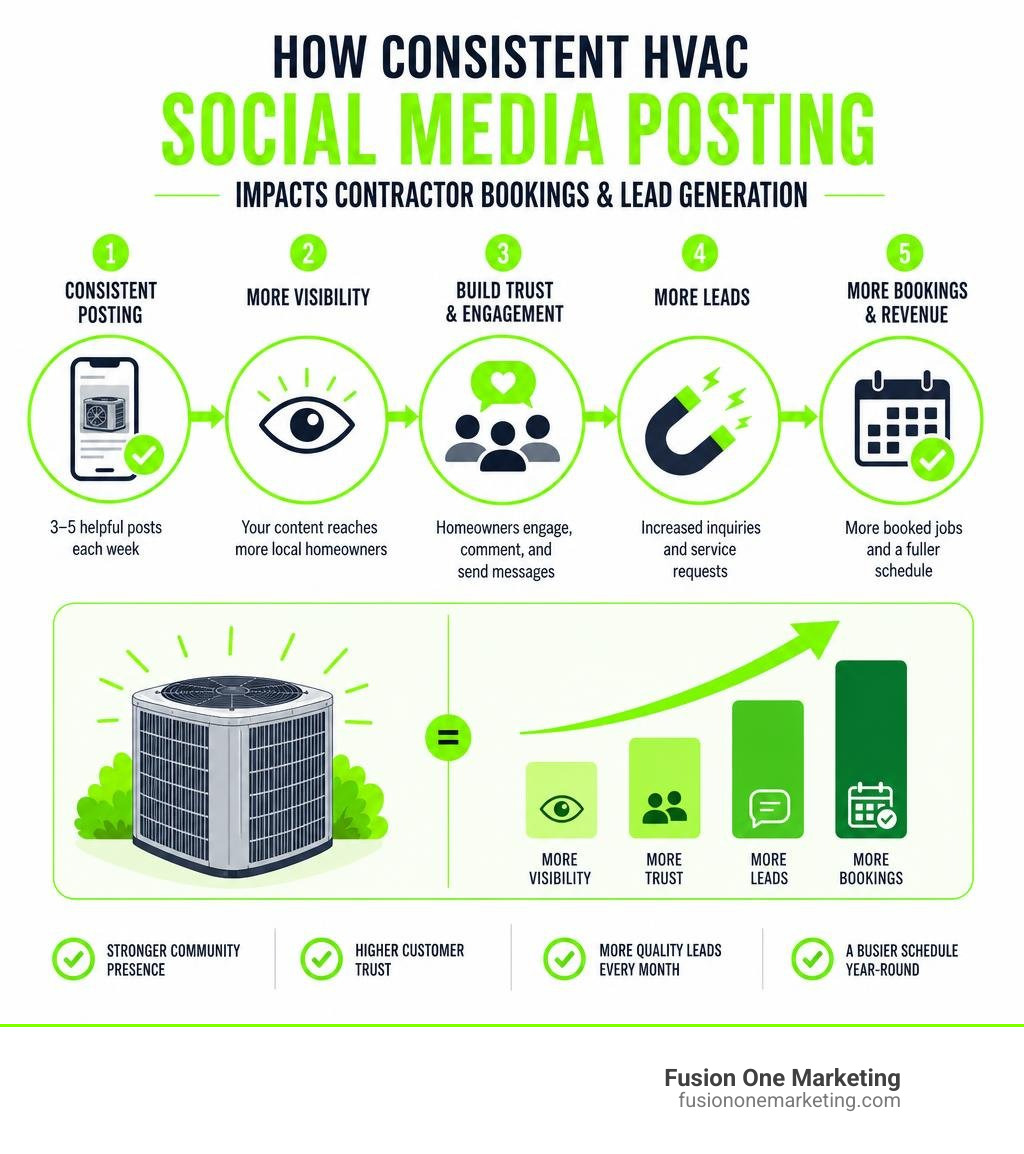
Choosing the Right Platforms for Your HVAC Social Media Strategy
One of the biggest mistakes we see blue-collar business owners make is trying to be everywhere at once. They set up profiles on Facebook, Instagram, LinkedIn, TikTok, X, and Pinterest, only to realize they don’t have the time to keep up with any of them. Suddenly, every account looks like a ghost town.
To build a successful hvac social media presence, you need to understand your target audience demographics and focus your energy where they actually spend their time. Homeowners in Birmingham, Huntsville, and Helena aren’t looking for emergency AC repairs on Pinterest. They are looking for local, reliable contractors on platforms built for community connection and visual proof.
When you are figuring out where to invest your energy, it helps to look at how different networks serve your business goals. For a deeper dive into this process, check out our guide on How to Determine the Best Social Media Platform for Your Business.
To help you decide where to focus first, here is a quick breakdown of how the major platforms stack up for HVAC targeting:
| Social Platform | Primary Target Audience | Best Content Types | Why It Matters for HVAC |
|---|---|---|---|
| Homeowners (Ages 30–65+) | Customer reviews, local updates, seasonal offers, community news | The absolute “must-have” hub; acts as a secondary website and review platform. | |
| Younger Homeowners (Ages 25–45) | Before-and-after photos, team spotlights, aesthetic jobsite reels | Excellent for showcasing clean work, modern installations, and company culture. | |
| YouTube | Homeowners seeking DIY help | Long-form tutorials, system maintenance guides, “How-To” videos | Excellent for SEO; builds massive authority and acts as a 24/7 trust builder. |
| TikTok | Gen Z & Millennials (Ages 18–35) | Short, funny videos, behind-the-scenes humor, quick tips | High viral potential; great for humanizing your team and building local brand recognition. |
| Google Business Profile | Active searchers with high intent | Special offers, service updates, direct booking links | Essential for local SEO; shows up directly in Google search results and Maps. |
Facebook and Instagram: The Core of HVAC Social Media
If you only have the bandwidth to manage two platforms, make it Facebook and Instagram.
Facebook remains the undisputed king of homeowner engagement. With over 70% of U.S. adults using the platform, it is where your ideal customers hang out, ask neighbors for recommendations, and research local service providers. When an air conditioner quits during a sweltering July afternoon in Alabama, homeowners often head to Facebook to see if their friends have recommended a reliable local technician.
Instagram is your visual portfolio. It allows you to showcase the high quality of your work through high-resolution before-and-after photos, clean installations, and engaging video reels. It is also highly effective for reaching younger, first-time homeowners who value brand personality and transparency.
To make the most of these platforms, you need to treat them as active, two-way communication channels. According to Rheem’s expert guide on social media best practices, social media should be treated as an “always-on” machine. That means consistent publishing paired with proactive community management. If you start a page, you must commit to maintaining it; a dead page can actually do more damage to your reputation than having no page at all.
YouTube and TikTok: Video Content for HVAC Social Media
We live in a visual-first world. In fact, potential customers are 35% more likely to book services after watching a video compared to just looking at a static image. This is where YouTube and TikTok come in.

TikTok and YouTube Shorts are perfect for short-form, engaging video content. You don’t need a Hollywood production crew to make these work. In fact, raw, authentic smartphone videos recorded by your techs on the jobsite often perform much better than highly polished, corporate videos.
Think about the daily scenarios your techs encounter. You can easily film:
- A 15-second clip showing “the worst air filter we’ve ever seen” (with a gentle reminder to change theirs).
- A quick, humorous blooper reel of your team trying to squeeze into a tight crawlspace.
- A helpful walk-through explaining how to program a smart thermostat.
On the other hand, YouTube is the second-largest search engine in the world. When a homeowner wants to know why their heat pump is making a strange clicking noise, they go to YouTube. By creating simple, educational video tutorials, you build incredible local authority. When those homeowners eventually need a professional repair or system replacement, your brand is already the trusted expert they know and like.
5 High-Performing Content Ideas for HVAC Social Media
Now that you know where to post, let’s talk about what to post.
The secret to social media success for blue-collar brands is simple: show, don’t tell. Stop posting generic stock photos of happy families sitting next to brand-new outdoor condenser units. Homeowners see right through them. Instead, use real-life, original content that highlights your actual team, your real customers, and the actual work you do every day in our local communities.
To understand why this shift matters so much for home services, read more about The Importance of Social Media for Home Service Businesses. It explains how consistent, authentic social media content builds a layer of trust that traditional advertising simply cannot replicate.

Here are five high-performing content ideas you can start using this week:
Before-and-After Project Showcases
There is something incredibly satisfying about seeing a messy, outdated, rusted-out system replaced by a beautiful, clean, modern HVAC installation.
Before-and-after photos provide undeniable visual proof of your team’s expertise. When you post these, don’t just show the equipment. Explain the story behind it.
- What was the homeowner’s problem? (e.g., “This family in Huntsville was dealing with sky-high power bills and an AC that couldn’t keep up with the summer heat.”)
- What was your solution? (e.g., “We installed a high-efficiency system with a smart thermostat.”)
- What was the outcome? (e.g., “Now they are staying cool, and their energy bills are expected to drop by 25%!”)
This kind of storytelling builds immediate trust and helps prospective customers envision the exact same high-quality results in their own homes.
Seasonal Maintenance Tips and Filter Reminders
HVAC is a highly seasonal business. Our social media strategy should reflect that. Use your platforms to educate customers on preventative maintenance before extreme weather hits.
In the spring, post reminders about scheduling AC tune-ups to beat the summer rush. In the late fall, share tips on how to prepare furnaces for freezing temperatures.
You can also run regular “filter change reminders.” Create a recurring monthly post with a fun, eye-catching graphic reminding homeowners to check their air filters. Explain why it matters—how a dirty filter restricts airflow, strains the system, and inflates utility bills. By providing this consistent, practical education, you position your business as a helpful resource rather than a pushy salesperson.
Behind-the-Scenes and Team Spotlights
People buy from people they know, like, and trust. Homeowners are often hesitant to let strangers into their homes. You can break down that barrier by humanizing your brand on social media.
Showcase your team! Post photos of your technicians on the job, celebrate their work anniversaries, highlight their training achievements, or share a fun “get to know the team” spotlight.
- “Meet Justin! He’s been keeping homes cool in Helena for five years. When he’s not installing state-of-the-art heat pumps, he’s coaching his son’s little league team.”
When a customer books a service call and Justin shows up at their door in his uniform, they won’t feel like a stranger is walking into their home. They will feel like they already know him. That is the power of local trust.
Balancing Value and Promotion: The 80/20 Rule
If your social media feed consists entirely of posts saying “Call us today for a free estimate!” or “10% off new installations!”, your audience will quickly tune you out. Nobody logs onto social media hoping to be constantly pitched to.
To keep your audience engaged, you should follow the 80/20 rule:
- 80% of your content should be value-driven. This includes educational tips, entertaining stories, community involvement, team spotlights, and helpful advice.
- 20% of your content should be promotional. This is where you directly pitch your services, share special discounts, promote your maintenance agreements, or ask for bookings.
By focusing on value first, you earn the right to pitch your services. If you want to learn more about keeping your followers hooked, check out these 5 Ways to Boost Your Social Media Engagement Now.
Creating Value-First Educational Content
Educational content is the ultimate trust builder. When you share your knowledge freely, you show homeowners that you care about their comfort and safety, not just their wallets.
Some great topics for educational content include:
- Troubleshooting guides: “Is your AC blowing warm air? Check these 3 simple things before you call a technician.”
- Energy efficiency tips: “How setting your thermostat just 2 degrees higher in the summer can save you up to 10% on your cooling bills.”
- Debunking common myths: “Does closing vents in unused rooms really save energy? (Spoiler alert: No, it actually strains your system!)”
This content helps homeowners solve minor issues on their own, which builds incredible goodwill. When they eventually face a major system breakdown that they can’t fix themselves, you will be the very first company they call.
Crafting Non-Pushy Promotional Offers
When it is time to post promotional content, make sure your offers are clear, timely, and easy to act upon.
Instead of generic sales pitches, focus on solving immediate pain points. If a heatwave is coming, promote a fast-response tune-up special. If you are entering the shoulder season, run a limited-time installation discount to keep your crews busy.
Another highly effective strategy is promoting flexible payment options. Purchasing a new heating and cooling system is a major, often unexpected expense for most families. By highlighting accessible financing options, you can turn a stressful situation into an manageable monthly payment. To learn how to frame these financial conversations effectively on your digital channels, take a look at Acorn Finance’s contractor resources.
Driving Leads with Paid HVAC Social Media Ads
Organic social media is fantastic for building trust, showcasing your culture, and nurturing your existing customer base. However, because platform algorithms limit the organic reach of business pages (often showing unpaid posts to only 5–10% of your followers), you need a paid strategy to consistently get in front of new customers.
Paid social media advertising allows you to bypass the algorithms and put your message directly in front of homeowners who have never heard of your business before.
When done correctly, paid ads are like a faucet you can turn on or off depending on how busy your schedule is. To understand how paid social fits into a broader marketing engine, read our breakdown of a complete Social Media Marketing Strategy.
Hyper-Local Targeting and Demographics
The greatest benefit of paid social media ads is their targeting precision. You don’t waste money showing your ads to people who live outside your service area.
If you are an HVAC contractor based in Birmingham, you can configure your campaigns to target specific ZIP codes or a precise radius around Birmingham, Huntsville, and Helena.
You can refine your targeting to reach:
- Homeowners: Exclude renters who aren’t authorized to make HVAC repair or replacement decisions.
- Specific Demographics: Target older homes that are statistically more likely to need system replacements or duct cleaning.
- Retargeting: Show ads specifically to people who have recently visited your website but didn’t fill out a contact form. This keeps your brand top-of-mind while they are making their decision.
Measuring ROI and Tracking Ad Performance
You should never treat advertising as a guessing game. To make sure your budget is actually growing your business, you need to track the metrics that truly matter.
Forget about “vanity metrics” like likes, shares, or comments. While those are nice for brand awareness, they don’t pay the bills. Instead, focus on:
- Lead Volume: How many phone calls, website forms, or direct messages did the ad generate?
- Customer Acquisition Cost (CAC): How much did you spend on ads to acquire one paying customer?
- Return on Ad Spend (ROAS): How much revenue did you generate for every dollar spent on ads?
By setting up proper conversion tracking and lead source tracking, you can confidently see exactly which campaigns are booking jobs and adjust your budget accordingly.
Frequently Asked Questions About HVAC Social Media
We talk to home service contractors every day about their digital marketing. Here are some of the most common questions we get about managing hvac social media effectively:
How often should an HVAC company post on social media?
Consistency is far more important than daily volume. We recommend posting 3 to 5 times per week.
If you post too infrequently (like once a month), the algorithms will bury your content, and your page will look inactive. If you try to post multiple times every single day, you will likely burn out or start posting low-quality filler content.
Create a simple content calendar at the start of each month. Block out your topics ahead of time so you always know what you are posting and when.
What is the best way to handle negative reviews on social media?
First, don’t panic or get defensive. Every business faces a tough customer eventually. How you handle a negative review publicly can actually build more trust with prospective customers than a perfect five-star record.
Follow these steps for a professional response:
- Respond quickly and politely. Keep your cool.
- Take the conversation offline. Say something like: “We take pride in our work and want to make this right. Please call our office manager directly at 205-547-2220 so we can resolve this for you immediately.”
- Never argue in the comments. Prospective customers are watching to see how you handle conflict. Show them that you are professional, reasonable, and committed to customer satisfaction.
How quickly should we respond to customer inquiries on social media?
As fast as humanly possible! Today’s consumers expect rapid communication. In fact, 40% of consumers expect a response within the first hour of reaching out on social media.
If a homeowner sends a direct message asking for an estimate or emergency service, and you take 24 hours to reply, they have already messaged three of your competitors and booked a call with someone else. Treat social media messages with the same urgency as a ringing phone.
Conclusion
Building a powerful hvac social media presence doesn’t happen overnight, but it is one of the most rewarding investments you can make for the long-term growth of your business. By consistently showing up, sharing authentic content, and engaging with your local community, you build a brand that homeowners naturally think of first when they need help.
Of course, we know that running a busy HVAC business keeps your hands full. Between managing crews, answering service calls, and keeping customers happy, finding the time to plan, design, and manage social media can feel impossible.
That is where we come in. At Fusion One Marketing, our all-in-one “Digital Domination” program integrates social media, SEO, website design, and paid ads to drive real, measurable growth for home service businesses.
If you are ready to stop posting boring content and start booking more jobs, reach out to our team at our Birmingham digital marketing agency today. Let’s build a strategy that keeps your schedule full year-round!