What Is Digital Direct Marketing and How Does It Function?
At its core, direct outreach revolves around addressability—the ability to identify an individual prospect or customer and deliver a tailored message directly to them. While mass advertising casts a wide net over television broadcasts or billboards, direct marketing establishes an individual, one-to-one communication stream designed to prompt a specific, measurable response.
Digital direct marketing takes this direct response philosophy and powers it with digital infrastructure. Rather than waiting days for a printed letter to arrive in a physical mailbox, businesses can send interactive messages straight to a user’s screen in seconds. When built around an opt-in audience, this approach creates an ongoing dialogue with people who have already shown an interest in your services. As outlined in academic studies on marketing communication methods, moving from broad awareness campaigns to targeted direct methods allows businesses to guide prospective customers smoothly through each stage of the buying journey.
Key Channels in Digital Direct Marketing
Modern digital campaigns rely on several core channels to reach users wherever they spend their screen time:
- Email Marketing: The workhorse of direct communication. By applying proven email marketing strategies, companies can deliver educational newsletters, seasonal service reminders, and exclusive promotions directly to a subscriber’s inbox.
- SMS Messaging: Text messaging offers unmatched immediacy. Because most text messages are opened within minutes, SMS works exceptionally well for urgent scheduling alerts, flash promotions, and appointment confirmations.
- Mobile App Push Notifications: For brands with dedicated mobile applications, push notifications provide a direct line to deliver time-sensitive updates, loyalty rewards, and personalized service reminders right to a device’s lock screen.
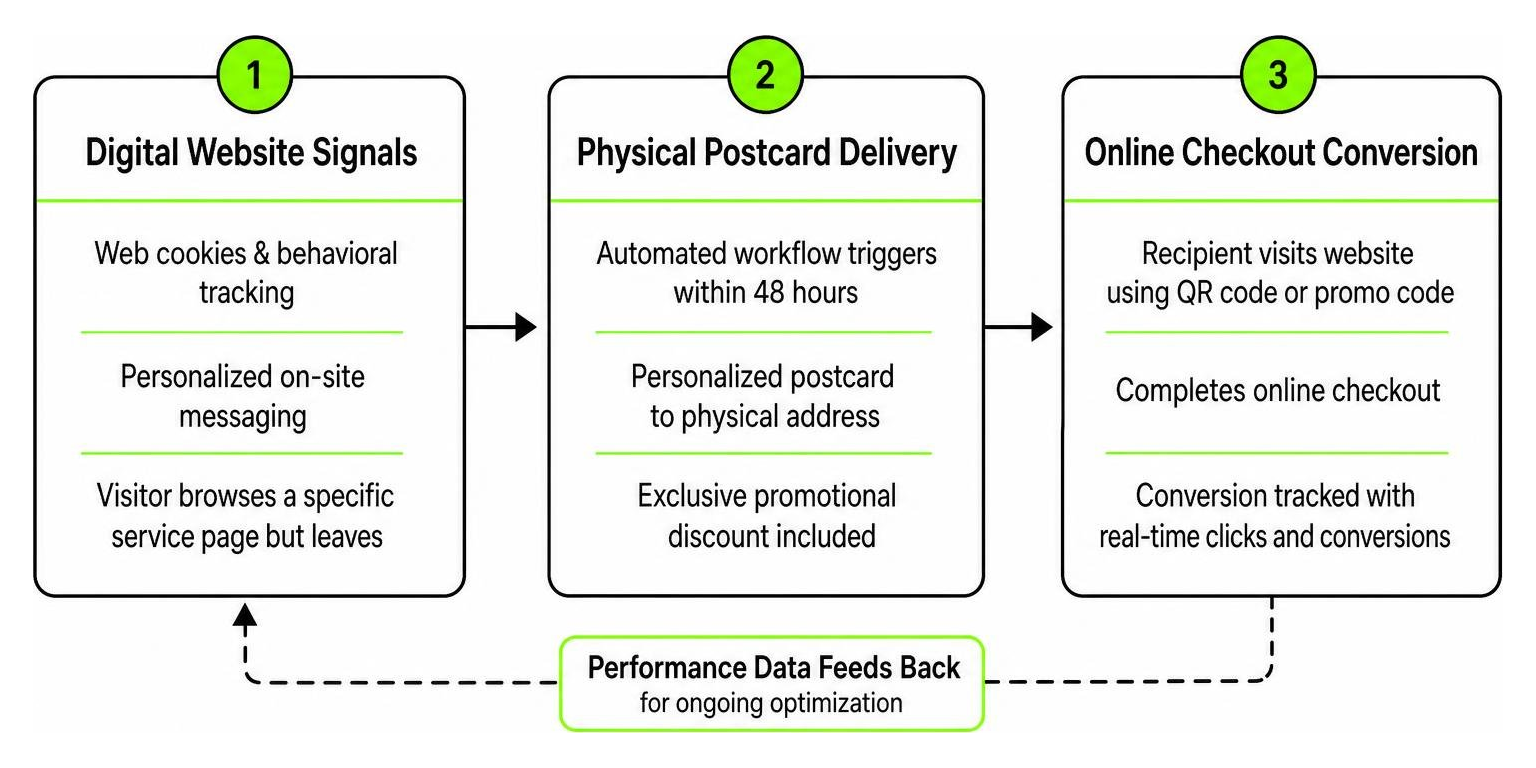
- Web Cookies & Personalized On-Site Messaging: Browser cookies and behavioral tracking allow websites to dynamically display custom banners, personalized offers, and saved cart reminders based on a visitor’s previous browsing history.
- In-Game & Interactive Media Ads: Emerging digital formats now allow direct response messages to appear natively inside gaming environments and interactive mobile apps, reaching engaged audiences during leisure time.
Permission-Based Marketing and Consumer Privacy
The strength of any direct outreach depends on trust. Permission-based marketing requires explicit opt-in consent before you send promotional messages to an individual. Respecting consumer privacy is not just good business etiquette; it is enforced by strict regulatory frameworks like CAN-SPAM, the TCPA for SMS, and regional data protection laws.
Prioritizing zero-party and first-party data—information that consumers intentionally share with you, such as survey responses, service preferences, and contact details—protects your business from platform shifts. When consumers willingly join your list, your messages achieve higher engagement, lower unsubscribe rates, and long-term brand loyalty.
Comparing Digital Direct Marketing with Traditional Direct Mail
Both digital channels and physical mail aim to generate direct responses, but they accomplish this through entirely different user experiences.
Digital direct marketing delivers unmatched response velocity and low delivery costs. You can draft an email or launch a targeted digital campaign in the morning and review detailed interaction data by the afternoon. On the other hand, physical direct mail cuts through digital clutter by providing a tangible object that sits on a kitchen counter or office desk. According to educational resources on direct outreach from Principles of Marketing Chapter 16, physical touchpoints often evoke higher sensory recall, balancing out the rapid delivery of digital formats.
| Feature | Digital Direct Marketing | Traditional Direct Mail |
|---|---|---|
| Delivery Speed | Instantaneous | 3 to 7 business days |
| Production Cost | Low per-contact cost | Moderate to high (printing & postage) |
| Audience Engagement | High volume, but battles inbox clutter | High sensory impact and staying power |
| Response Velocity | Minutes to hours | Days to weeks |
| Tracking Precision | Real-time clicks, opens, and conversions | QR codes, custom promo codes, tracked phone numbers |
Why Combining Direct Mail and Digital Channels Drives Higher ROI
Relying solely on digital channels has become harder. With roughly 40% of consumers holding 50 or more unread emails in their inboxes, and digital ad costs climbing steadily across major networks, pure digital outreach can run into audience fatigue. Conversely, relying solely on physical mail can leave conversion gaps if prospects cannot immediately take action online.
Combining both methods creates a unified strategy. Multi-touch workflows allow each medium to reinforce the other. For instance, physical retargeting bridges offline and online actions: when a website visitor browses a specific service page but leaves without booking, an automated workflow can trigger a personalized postcard to their physical address within 48 hours.
Integrating direct mail into your outreach also revitalizes sales promotions. Sales promotion represents an industry of over $300 billion, and roughly 85% of Americans actively redeem coupons. By delivering exclusive promotional discounts across both physical mail and digital channels, you capture attention across multiple everyday environments. This multi-channel approach aligns directly with understanding the digital marketing funnel, ensuring prospects receive consistent reminders as they move from initial awareness to final purchase.
Personalization Strategies for Digital Direct Marketing and Direct Mail
Effective direct campaigns go beyond inserting a first name into a subject line. Modern personalization relies on dynamic segmentation and Recency, Frequency, Monetary (RFM) modeling.
By organizing your customer database through structured CRM customer data management, you can trigger automated direct campaigns based on real consumer behavior:
- Lapsed Customer Reactivation: Identify clients who have not scheduled seasonal service in nine months and send a combined email sequence and physical postcard with a dedicated return discount.
- High-Value Loyalty Rewards: Segment your top 10% of customers by lifetime spend and send high-touch physical mailers paired with VIP digital promotions.
- Service Follow-Ups: Automatically follow up on completed home service jobs with an email feedback request, followed by a physical referral card offering savings for friends and family.
Pairing clean audience segments with persuasive copywriting techniques ensures your messaging remains helpful and solution-oriented rather than overly aggressive.
Crafting High-Converting Calls-to-Action Across Formats
A direct campaign is only as effective as its call-to-action (CTA). To maximize conversion velocity, eliminate friction at every step of the customer journey:
- Provide Clear, Singular Directions: Avoid confusing the recipient with multiple competing requests. Focus each piece on one distinct action, such as “Claim Your Seasonal AC Tune-Up.”
- Bridge the Offline-to-Online Gap: On printed postcards, feature high-contrast QR codes alongside short, readable personalized URLs (PURLs) so recipients can immediately access your landing page on their phones.
- Offer Tangible Incentives: Give prospects a compelling reason to respond right away, such as a limited-time promotional voucher or an instant downloadable service guide.
- Optimize Landing Environments: Ensure the destination page matches the visual design, headline, and offer presented in the initial message, allowing users to complete their booking with minimal form fields.
How to Track, Measure, and Optimize Direct Marketing Campaigns
Tracking performance across both offline and online formats ensures every marketing dollar works efficiently. As highlighted in guides covering Marketing Communications in the Digital Age, modern campaigns require comprehensive analytics that measure conversion volume, acquisition costs, and long-term customer value.

When establishing your baseline metrics for measuring campaign success, focus on clear performance indicators:
- Conversion Rate: The percentage of recipients who completed the desired action relative to the total audience reached.
- Cost Per Acquisition (CPA): Total campaign expenditure (including print, postage, digital ad spend, and creative production) divided by the total number of paying customers acquired.
- Return on Ad Spend (ROAS): Total revenue generated directly attributed to the campaign divided by overall campaign costs.
- Customer Lifetime Value (LTV) Impact: Tracking repeat business generated over time by customers acquired through integrated direct workflows.
Essential Tracking Tools: UTMs, Pixels, and Call Tracking
Connecting physical and digital actions requires a few foundational tracking tools:
- Custom Campaign Links: Applying UTM tracking codes to links embedded within emails, SMS messages, and QR codes lets your analytics platform identify exactly which channel and creative variation generated each visit.
- Dynamic Call Numbers: Utilizing dedicated call tracking solutions on direct mailers and landing pages allows you to attribute incoming phone inquiries to specific campaigns, down to the exact mail drop date.
- Conversion Pixels & Event Tracking: Installing tracking pixels on key website milestones (such as booking confirmation pages) ensures that both digital ad platforms and direct workflows can measure conversions and automatically refine audience targeting.
Frequently Asked Questions About Digital Direct Marketing
What is the primary difference between traditional and digital direct marketing?
Traditional direct marketing relies on physical mediums like letters, flyers, and catalogs sent via postal mail, whereas digital direct marketing uses electronic formats such as email, SMS, and targeted online messages. Digital direct marketing delivers significantly faster response times, lower distribution costs, and real-time interaction tracking, while traditional direct mail offers sensory presence and higher physical staying power in a home or office.
How do direct mail and digital direct marketing work together?
Direct mail and digital channels function together through multi-touch automated workflows. A business might introduce a seasonal campaign via email or social advertising, followed by a targeted physical postcard sent to prospects who showed interest but did not book. Postcards can feature custom QR codes and personalized web links that bring prospects back to digital booking pages, creating a continuous loop between physical and online interactions.
What are the most common challenges in digital direct marketing?
The most common hurdles include rising inbox clutter, consumer ad fatigue, and strict privacy regulations surrounding data collection. Marketers can overcome these obstacles by keeping customer databases clean, obtaining clear opt-in permissions, personalizing offers through CRM data, and pairing digital messaging with physical touchpoints to ensure messages get noticed.
Conclusion
Combining direct mail with modern digital channels allows businesses to cut through online noise, build lasting brand familiarity, and secure steady, measurable growth. By connecting personalized print touchpoints with automated email, SMS, and targeted digital campaigns, you create an integrated marketing engine that engages customers wherever they are.
At Fusion One Marketing, we help businesses in Birmingham, AL, Huntsville, AL, Helena, AL, and throughout Alabama build comprehensive marketing systems. Through our all-in-one Digital Domination program, our team brings together custom websites, search engine optimization, pay-per-click advertising, and direct response strategies to generate consistent leads. Reach out to our team today to discover how an integrated direct marketing strategy can scale your business.