

More Traffic Means Nothing If It Does Not Bring The Right Leads.
An internet marketing services business should help you get more than website visits. It should build a measurable path from a local search, ad, social post, or email to a phone call, estimate request, booked job, and revenue.
For a home services company, ask these three questions before choosing a marketing provider:
- Who are we trying to reach? Target people in your service area who need your work.
- What action should they take? Call, submit a form, schedule service, or request an estimate.
- How will we track results? Measure qualified leads, cost per lead, booked jobs, and revenue – not traffic alone.
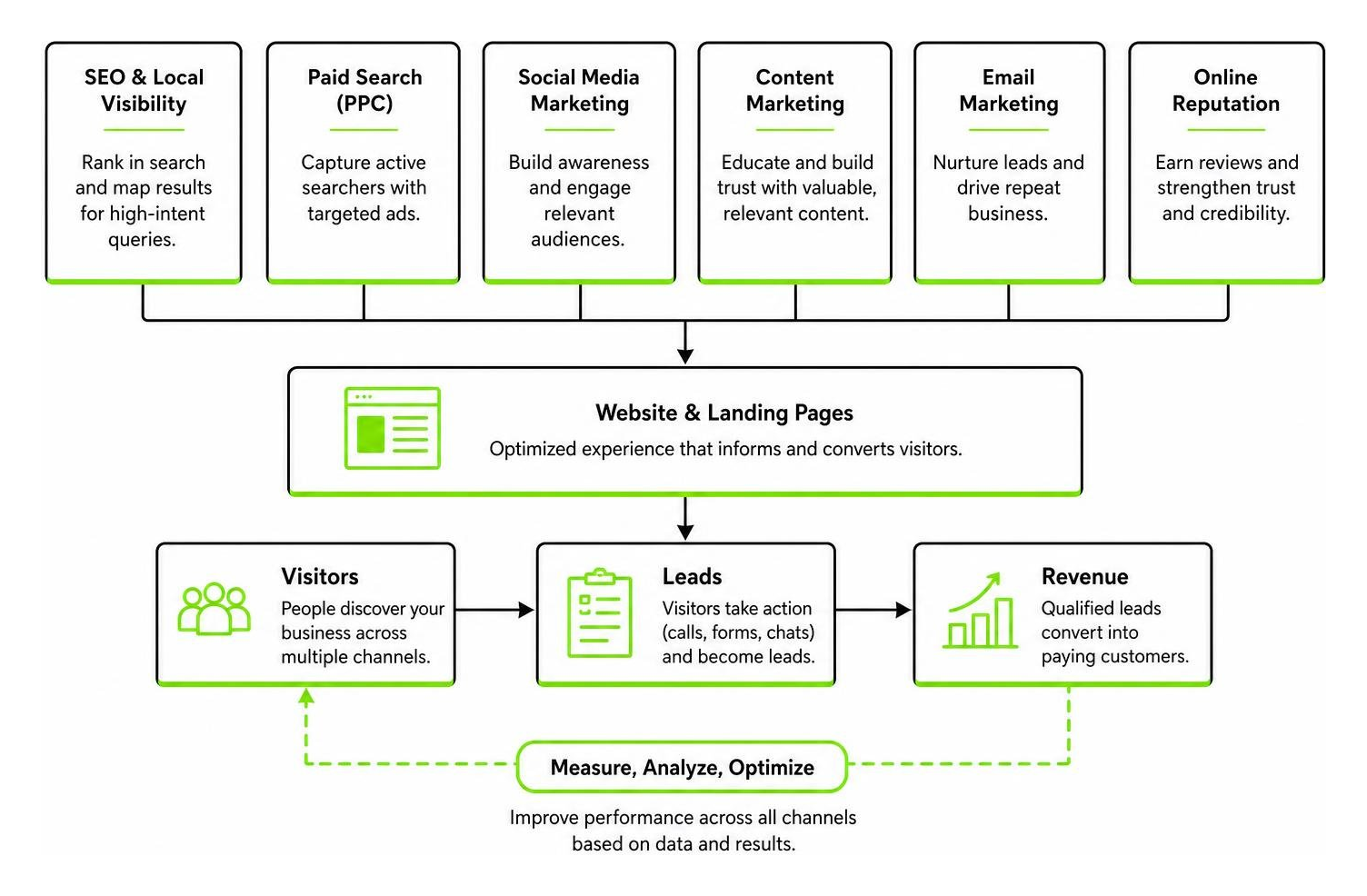
Traffic can be useful, but it is a means, not the goal. A thousand visitors who never contact you will not keep crews busy. Strong internet marketing connects local SEO, paid search, helpful content, social media, email, and a conversion-focused website so each channel supports the same outcome: more profitable customers.
I am Rob Humm, a co-owner of Fusion One Marketing with hands-on digital marketing experience since 2011, specializing in local search, PPC, and GEO. In this guide, I will explain what to expect from an internet marketing services business and how to judge marketing by leads and growth rather than surface-level numbers.

1. Digital Marketing vs. Offline Marketing: The Shift to Measurable Performance
For decades, traditional marketing was the default choice for growing a local company. You bought space in the Yellow Pages, placed an ad in the weekly circular, rented a billboard along the highway, or aired a local radio spot. While those mediums built general awareness, they operated in an analytical void. You knew money went out, but attributing specific customer calls to specific placements required crude guesswork.
Modern digital marketing replaced that uncertainty with channel flexibility, precise audience selection, and real-time tracking. When you understand what digital marketing can do for you, the differences between legacy offline advertising and a modern data-driven system become apparent.
| Marketing Feature | Digital Marketing | Offline Traditional Advertising |
|---|---|---|
| Audience Targeting | Hyper-specific (demographics, intent, location, behavior) | Broad broadcast (geographic zone only) |
| Budget Flexibility | Scalable daily budgets; adjust or pause anytime | Large upfront commitments with fixed contracts |
| Performance Tracking | Real-time analytics, attribution models, and conversion tracking | Delayed, estimated, or non-existent direct metrics |
| Message Optimization | A/B testing copy, graphics, and landing pages on the fly | Static creative; cannot alter after printing or airing |
| Interaction Model | Two-way engagement (calls, forms, chats, reviews) | One-way passive broadcasting |
The Demise of Unchecked Offline Spend
Traditional media carries high overhead and rigid production schedules. If you print 20,000 flyers with a typo or run an uninspiring radio spot, you are stuck with the expense. Worse, broadcast marketing forces you to pay for everyone who sees or hears your ad, regardless of whether they own a home or need your services. As covered in our guide to digital marketing 101, digital channels remove this waste by directing budget solely toward active prospects.
The Power of Granular Audience Targeting
Online advertising lets you filter audiences with high precision. Instead of blasting an entire metropolitan area, you can show ads exclusively to homeowners within specific zip codes who are searching for emergency pipe repair or AC installation.
Behavioral segmentation and remarketing campaigns allow us to re-engage people who visited your pricing page but did not submit a contact form. That level of targeting ensures your marketing dollars focus on prospects with genuine commercial intent.
2. Core Pillars of a High-Impact Internet Marketing Services Business
An exceptional marketing strategy is not a collection of disconnected tasks. It is an integrated engine where every component supports the customer journey from initial discovery to closed business. When an agency delivers comprehensive digital marketing services, it aligns several core disciplines into a unified acquisition strategy.
Search Engine Optimization and Local Visibility
Search engines are the primary modern storefront. When a homeowner experiences a sudden water leak or broken furnace, they turn to Google. Effective search engine optimization ensures your business ranks at the top of organic search results and Google Map Packs when high-intent queries occur.
Key SEO priorities include:
- Keyword Strategy: Targeting high-intent transactional phrases (e.g., “furnace replacement near me”) rather than broad informational keywords.
- On-Page Optimization: Structuring title tags, headings, content, and internal links so search engines understand your service offerings.
- Google Business Profile (GBP): Optimizing your profile with accurate Name, Address, and Phone (NAP) details, updated service areas, weekly updates, and real project photos.
- Review Generation: Earning consistent, positive reviews that reinforce trust and improve local ranking signals.
- Backlink Acquisition: Earning links from trusted local directories, community organizations, and industry platforms to build domain authority.
Pay-Per-Click Advertising and Conversion Optimization
While organic SEO builds durable long-term authority, pay per click advertising secures immediate visibility at the top of search engine result pages. Paid search captures customers who need service right away.
Running paid ads successfully requires more than bidding on keywords. It demands dedicated conversion optimization. Sending paid ad traffic to a generic homepage often wastes budget. Instead, campaigns perform best when paired with high-converting, mobile-responsive custom websites featuring click-to-call buttons, trust badges, transparent service overviews, and short contact forms.
Social Media Marketing and Brand Authority
Social media is not just about posting photos of company vehicles; it builds brand familiarity and stays top of mind across your service area. Through strategic social media marketing, you can showcase finished projects, highlight client reviews, and share helpful home maintenance tips.
Targeting local homeowners on platforms like Facebook and Instagram reinforces trust. When an urgent home issue arises, homeowners naturally choose the company they already recognize and respect.
3. High-ROI Strategies for Businesses on a Budget
Maximizing a marketing budget requires operational efficiency. You do not need to spend tens of thousands of dollars each month across every available channel to see meaningful returns. Applying smart marketing tips for local service businesses allows you to turn a modest budget into predictable revenue.

Content Marketing and Strategic Asset Repurposing
Creating content from scratch for every channel consumes time and resources. A practical approach is creating comprehensive, anchor assets that can be repurposed across multiple formats:
- Write an in-depth guide answering a common customer question (e.g., “How to Tell If Your Heat Pump Needs Replacement”).
- Record a 2-minute video on a job site demonstrating the concept firsthand.
- Extract short social media clips and image quotes from that single video.
- Summarize the key takeaways into a short segment for your monthly email newsletter.
This repurposing approach builds topical authority on your website, answers prospect questions, and keeps your social channels active without overspending on production.
Targeted Email Marketing Workflows
Email marketing consistently delivers some of the highest returns in digital marketing. For home service contractors and local businesses, your existing customer list is a valuable asset.
Set up automated workflows to re-engage past clients:
- Post-Service Follow-Ups: Automated emails checking on recent work and requesting a Google review.
- Seasonal Maintenance Reminders: Pre-summer AC tune-up reminders sent in March or pre-winter heating checks sent in September.
- Membership/Service Plan Renewals: Automated notices that keep service contracts active and generate steady recurring revenue.
Local Community Outreach and Business Listings
Local trust extends beyond search algorithms. Research shows that 67% of small-and-medium-sized business leaders consider community support essential to their long-term survival.
Building connections with local civic groups, maintaining active chamber memberships, and engaging with local community business initiatives creates genuine community goodwill. These relationships often lead to local press mentions and regional backlinks that bolster your search engine rankings.
4. Measuring What Actually Matters: Beyond Vanity Metrics to True ROI
Many agencies hide behind vanity metrics like page impressions, raw clicks, and total traffic. These figures look impressive on a report, but they do not reflect business growth. If your website receives 20,000 monthly visitors from outside your service area, that traffic will not help you hit sales goals.
A professional digital marketing audit focuses on commercial metrics that tie directly to business revenue:
- Cost Per Qualified Lead (CPQL): How much marketing spend is required to generate a legitimate call or form submission from an actual prospect.
- Conversion Rate (CVR): The percentage of website visitors who take an intentional action, such as calling your dispatch team or requesting an estimate.
- Customer Acquisition Cost (CAC): Total sales and marketing spend divided by the number of new paying customers acquired.
- Customer Lifetime Value (LTV): The total revenue a single customer generates over their relationship with your company through repeat service and maintenance agreements.
Why an Internet Marketing Services Business Focuses on Conversions Over Clicks
A dedicated marketing team analyzes how traffic moves through your sales pipeline. We track where leads originate, which pages they view prior to converting, and what messaging drives them to schedule an appointment.
Attribution modeling pinpoints which campaigns generate profitable jobs and which ones drain budget, allowing you to invest with confidence.
Essential Tracking Tools and Performance Analytics
Accurate measurement requires an integrated analytics foundation:
- Google Analytics 4 (GA4): Configured to track conversion events (form completions, phone link clicks, scheduler bookings) rather than simple pageviews.
- Dynamic Call Tracking: Software that assigns unique tracking numbers to distinct marketing channels, recording calls and attributing them to specific keywords or campaigns.
- CRM Integration: Linking digital lead sources directly to your dispatch or CRM platform to trace each lead to a closed invoice.
- Review Monitoring: Utilizing proactive reputation management software to track customer sentiment across platforms and protect conversion rates.
5. Overcoming Key Challenges and Future-Proofing Your Digital Strategy
Digital marketing evolves constantly. Search engine algorithms update, paid advertising platforms change their bidding rules, and consumer search behaviors shift toward conversational and AI-assisted queries. Navigating these changes requires understanding how to build a marketing strategy built on strong fundamental principles.
(Concept: A sustainable marketing engine aligns audience data with consistent acquisition, high-converting assets, and closed-loop revenue reporting.)
Evaluating an Internet Marketing Services Business for Long-Term Growth
Choosing between handling marketing internally or partnering with an outside agency is an important operational decision. As detailed in our breakdown of agency vs in-house marketing, an experienced agency provides an entire team of dedicated specialists—covering SEO, paid media, graphic design, web development, and analytics—for less than the overhead of hiring multiple full-time employees.
When vetting potential agency partners, look for:
- Transparent Reporting: Clear visibility into lead data, call recordings, and ad spend with no hidden markups.
- Industry Experience: A proven track record of generating leads for service businesses in competitive markets.
- Custom Strategies: Marketing plans built around your service area, capacity, and revenue goals rather than generic packages.
- Account Ownership: Ensuring your business retains full ownership of your domain, website assets, ad accounts, and analytics data.
Staying Ahead of Industry Trends and Algorithm Updates
Search engines are increasingly prioritizing direct answers, user experience, and authentic first-hand expertise. To keep your business visible, focus on these ongoing optimizations:
- Demonstrating Direct Expertise: Publish photos of completed jobs, highlight team certifications, and explain local building codes to stand out from generic AI content.
- Technical Health Audits: Maintain fast page loading speeds, resolve broken redirects, and ensure smooth mobile experiences.
- Multi-Channel Synergy: Connect your SEO, PPC, social, and email efforts so a shift in one platform does not disrupt your overall lead flow.
Frequently Asked Questions About Internet Marketing Services
How does digital marketing differ from traditional offline marketing?
Digital marketing allows for precise audience targeting based on location, search intent, and user behavior. It provides real-time tracking of leads and revenue, enabling you to optimize campaigns instantly. Traditional offline marketing broadcasts to broad audiences with fixed costs, long commitments, and limited conversion tracking.
How can a small business effectively measure marketing ROI?
Track conversions directly tied to revenue. Implement dynamic call tracking and website event monitoring in Google Analytics 4, then connect those lead sources to your CRM or invoicing software. Calculate ROI by comparing total revenue generated from closed jobs against your total marketing investment across each channel.
What are the core components of internet marketing services for businesses?
A comprehensive marketing program includes local and organic SEO, paid search advertising (PPC), conversion-optimized website design, content marketing, targeted email workflows, active social media management, and online reputation management.
Conclusion
Traffic numbers can be misleading. A massive spike in website visitors means very little if your phones stay quiet and your service schedule remains empty.
A high-performing internet marketing program focuses on tangible outcomes: qualified inbound leads, scheduled appointments, and steady revenue growth. By combining local search optimization, targeted paid advertising, helpful content, and conversion-focused web design, your marketing becomes a reliable, measurable investment.
At Fusion One Marketing, we build integrated growth programs that generate real business for local service companies. Contact our team today to evaluate your current digital presence and start driving qualified leads that move your business forward.