

Copper Pipe Replacement: Repair or Repipe?
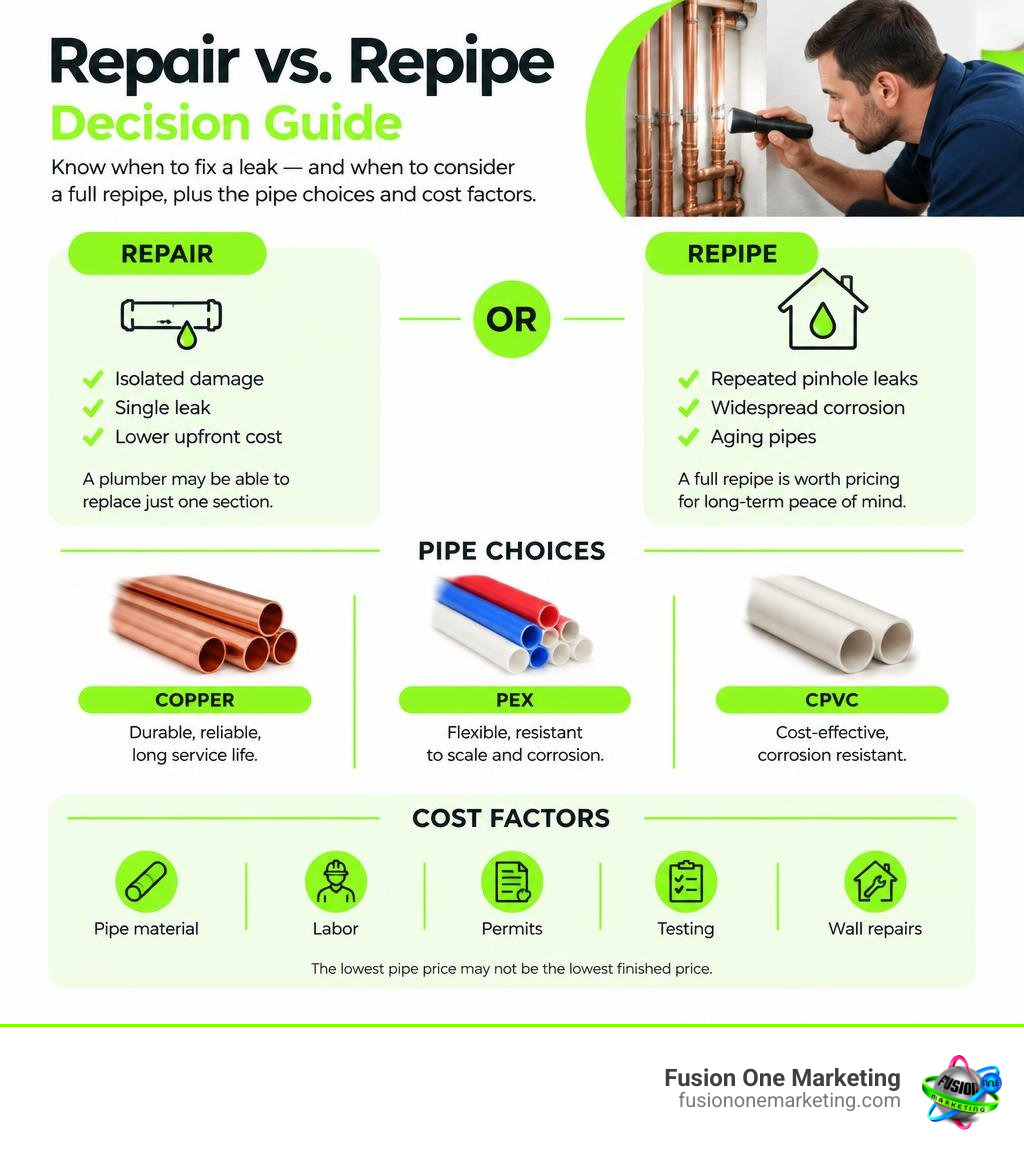
One copper pipe leak does not mean you need a whole-house repipe. If the damage is isolated, a plumber may be able to replace one section. Repeated pinhole leaks, widespread corrosion, or aging pipes make a full repipe worth pricing. Copper often lasts 50 to 70 years, but water chemistry and installation can shorten its life.
For a whole-house job, compare quotes for PEX, CPVC, and copper. Ask each plumber to spell out the pipe material, labor, permits, testing, and wall repairs. The lowest pipe price may not be the lowest finished price.
I’m Rob Humm, co-owner of Fusion One Marketing. Since 2011, I’ve helped home service businesses explain services like copper pipe replacement to customers searching online; this guide will help you weigh the options and costs.
Signs Your Aging Copper Pipes Need Attention
Over 60% of residential structures in the United States rely on copper plumbing. It has earned a reputation as the gold standard of modern water distribution because of its rigidity, natural cleanliness, and impressive 50- to 70-year service life. Even the best materials do not last forever. As systems approach the end of their operational lifespan, internal and external stresses begin to take a toll.

Catching system degradation early prevents catastrophic water damage, black mold growth, and expensive emergency restoration. The most frequent warning signs of deteriorating copper supply lines include:
- Unexplained Water Pressure Drops: When interior corrosion builds up or multiple microscopic leaks form throughout your line network, water volume drops noticeably at faucets and showerheads.
- Discolored or Metallic-Tasting Water: Tap water that runs red, brown, or blue-green—or leaves an astringent metallic aftertaste—signals active internal pipe oxidation and mineral breakdown.
- Visible Green Patina or Crusty Residue (Verdigris): External oxidation on exposed basement, attic, or crawlspace lines indicates moisture is seeping through microscopic pores in the metal or around soldered fittings.
- Damp Flooring and Warm Spots (Slab Leaks): In homes where water lines run beneath poured concrete foundations, a failing line will cause localized foundation warmth, saturated floor coverings, or inexplicable spikes in monthly water utility bills.
- Persistent Wall and Ceiling Stains: Water spots, bubbling paint, or damp drywall often point to slow pinhole seepage hidden inside structural cavities.
Understanding Pinhole Leaks and Acidic Water Damage
Pinhole leaks represent the single most common failure point in residential copper systems. Unlike catastrophic pipe bursts caused by rapid freezing, pinhole leaks are stealthy, millimeter-wide punctures that develop slowly from internal pitting corrosion.
Several primary culprits trigger these leaks:
- Water Chemistry and Acidity: Water with a low pH (below 6.5) is naturally aggressive toward copper. Over time, acidic water strips the protective inner patina of the pipe, eating away at the wall until tiny perforations emerge.
- Excessive Water Velocity: Plumbing codes generally limit water velocity in domestic copper systems to a maximum of 8 feet per second. When lines are undersized or water pressure runs excessively high, rapid internal friction physically erodes the copper walls, especially near 90-degree elbows and tees.
- Improper Installation and Flux Residue: During installation, plumbing technicians apply chemical flux to clean and prepare joints for soldering. If an installer fails to wipe away excess flux from the pipe interior, the remaining acidic paste continues to corrode the metal from the inside out.
- Galvanic Corrosion: Direct physical contact between dissimilar metals—such as copper piping resting on steel hanging straps or connected directly to older galvanized steel lines without a dielectric union—triggers an electrochemical reaction that rapidly degrades the softer metal.
- Electrolysis: Stray electrical currents flowing through building structures can find a grounding path through metal water pipes, accelerating localized pitting corrosion through electrical action.
When to Choose Partial Repair vs. Full Copper Pipe Replacement
Homeowners frequently ask whether a single leak warrants replacing an entire home’s plumbing network. In most cases, a single isolated leak in an otherwise healthy system does not require whole-house repiping. However, if your plumbing has crossed the 40- or 50-year mark and you are dealing with your third or fourth leak in a single calendar year, continuous patch repairs will quickly cost more than a planned system overhaul.
Use these diagnostic criteria to determine your best path forward:
- Choose Spot Repair When:
- The plumbing system is under 30 years old.
- The leak is isolated to an accessible, visible section of pipe.
- The pipe shows no signs of widespread green verdigris or wall thinning.
- A water quality test confirms neutral pH levels (between 6.5 and 8.5).
- You need a fast, budget-friendly stopgap using push-fit couplings, slip couplings, epoxy putty, or soldered replacement sleeves.
- Choose Whole-House Replacement When:
- You experience repeated pinhole leaks across different rooms or supply lines.
- The pipes are constructed with thin-wall Type M copper and are over 40 years old.
- An inspection reveals extensive pitting throughout horizontal runs.
- The home suffers from recurring slab leaks beneath poured concrete foundations.
- Water supply lines contain obsolete, hazardous materials like lead solder or degraded polybutylene.
Comparing Modern Piping Materials: Copper vs. PEX vs. CPVC
When planning a repipe, selecting the right material is essential for balancing system longevity, daily performance, and total upfront investment. Sourcing high-grade parts from established distributors like American Pipe and Supply ensures your replacement materials meet municipal plumbing codes and industry manufacturing standards.
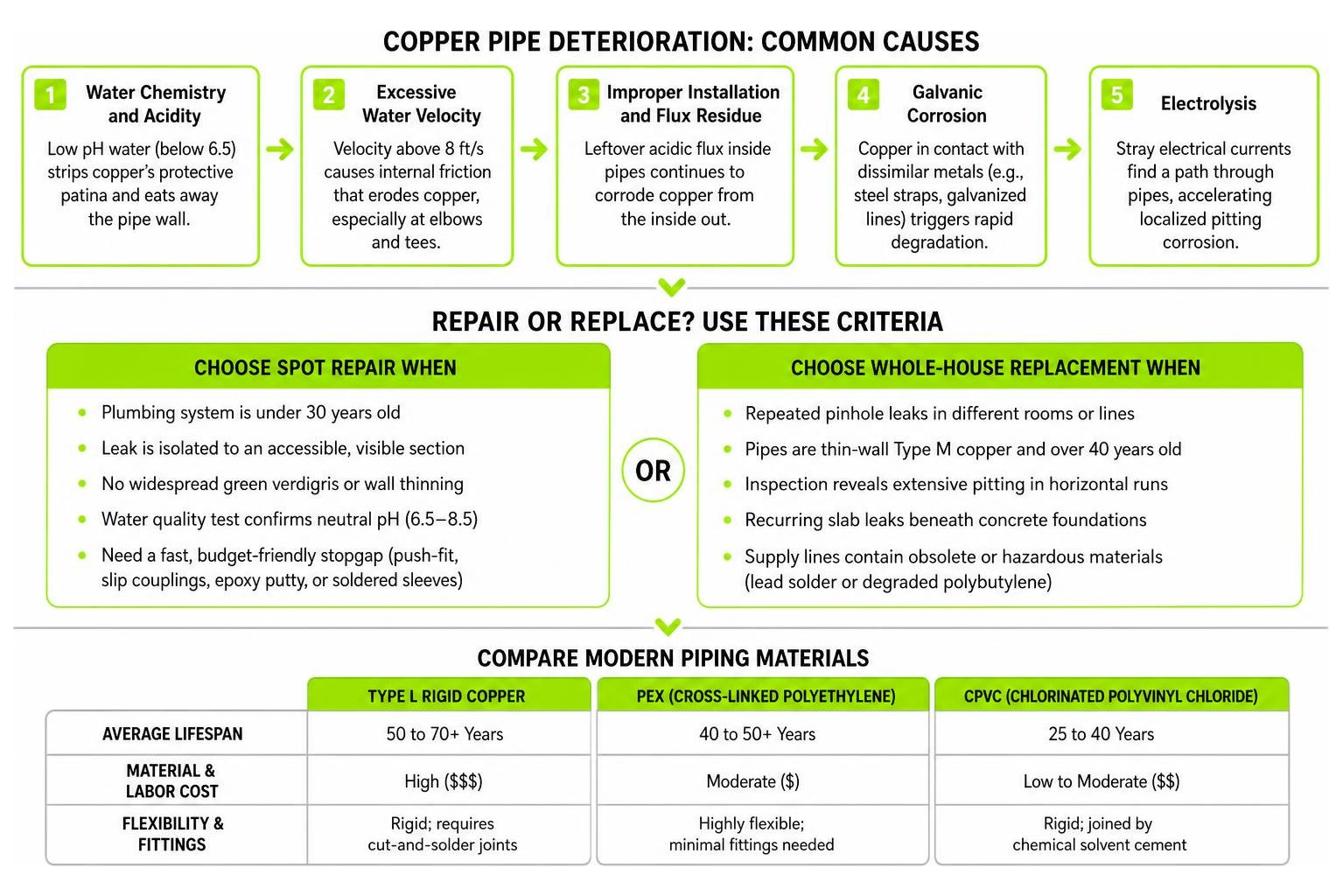
| Material Feature | Type L Rigid Copper | PEX (Cross-Linked Polyethylene) | CPVC (Chlorinated Polyvinyl Chloride) |
|---|---|---|---|
| Average Lifespan | 50 to 70+ Years | 40 to 50+ Years | 25 to 40 Years |
| Material & Labor Cost | High ($$$) | Moderate ($) | Low to Moderate ($$) |
| Flexibility & Fittings | Rigid; requires cut-and-solder joints | Highly flexible; minimal fittings needed | Rigid; joined by chemical solvent cement |
| Freeze Resistance | Vulnerable to bursting when frozen | Highly resilient; expands under ice expansion down to 20°F | Brittle when cold; susceptible to splitting |
| Corrosion Resistance | Vulnerable to acidic water (pH < 6.5) | Completely immune to acidic water and scale | Immune to corrosion; degrades under UV light |
| Antimicrobial Properties | Excellent; naturally inhibits bacterial biofilm | Neutral; requires clean water maintenance | Neutral; standard thermoplastic surface |
| Primary Use Cases | Premium homes, exposed runs, hot water supply lines | Whole-house repiping, tight wall cavities, cold climates | Budget-conscious retrofits, mobile homes |
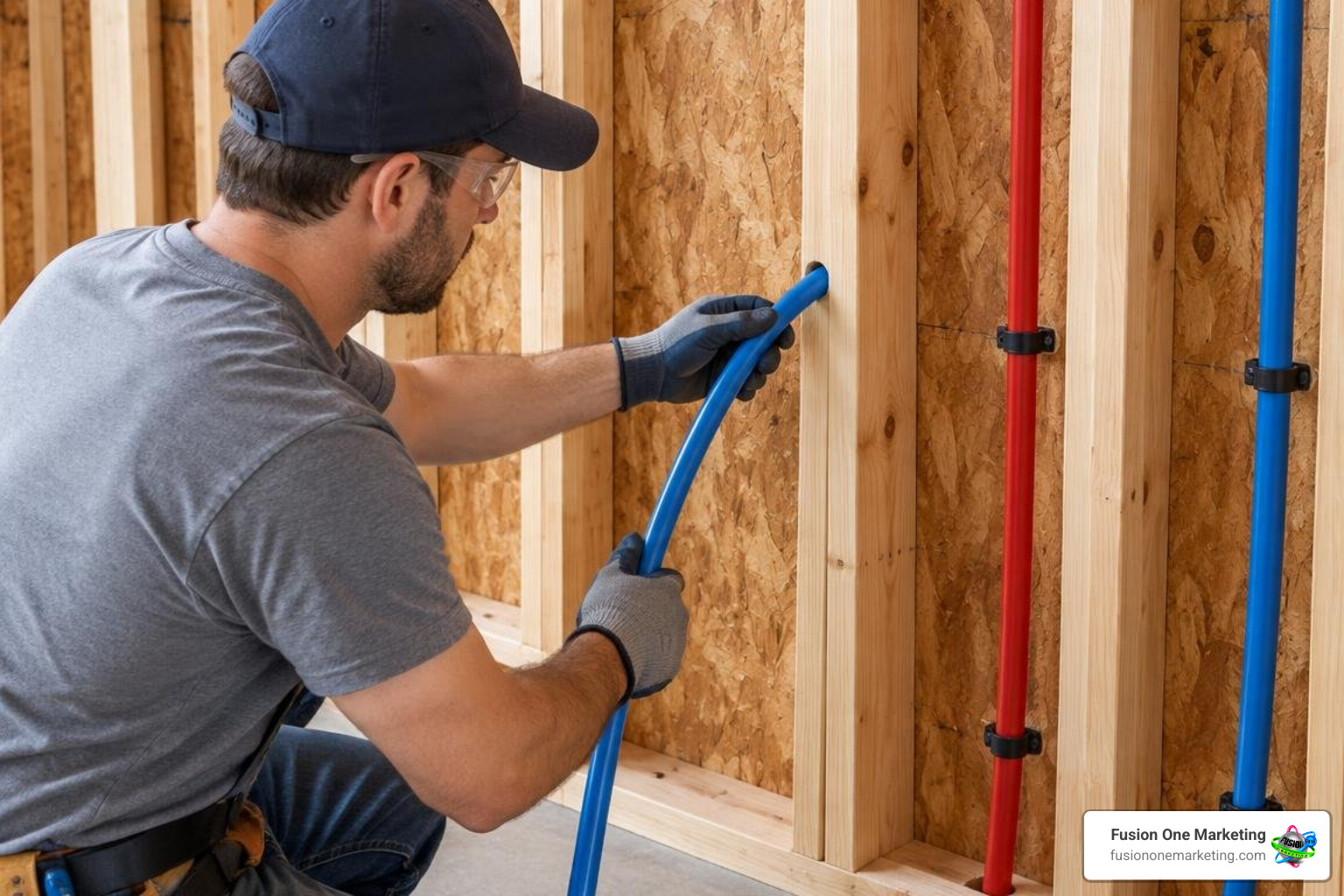
PEX has become the leading material for modern residential retrofits because its flexible tubing can be snaked through wall studs and ceiling joists with minimal drywall destruction. Rigid Type L copper remains the premier choice for outdoor risers, visible mechanical rooms, and applications where absolute structural rigidity and natural antimicrobial properties are priorities.
Critical Electrical Grounding Considerations When Converting to PEX
One of the most overlooked aspects of replacing metal plumbing with thermoplastic alternatives like PEX or CPVC is residential electrical grounding. In thousands of homes built throughout the 20th century, the municipal copper water main and interior copper distribution lines served as the primary electrical grounding electrode for the home’s main service panel.
Because PEX and CPVC are non-conductive plastics, cutting out copper pipe breaks the electrical grounding path. If an electrical fault occurs after a plastic repipe without updating the electrical system, stray currents cannot dissipate safely into the earth, creating severe shock and fire hazards.
Before completing a copper-to-PEX conversion, ensure your project complies with National Electrical Code (NEC) standards:
- Inspect the Service Panel Ground: Have a licensed professional verify whether your electrical grounding system depends on the metallic water pipe.
- Install Grounding Rods: If the water line was the primary ground, install two code-compliant copper-clad steel grounding rods driven at least 8 feet deep into the earth outside the foundation.
- Bond Remaining Metallic Sections: If you perform a partial repipe and leave metallic components (such as water heaters, gas lines, or localized copper manifolds), connect them using a copper grounding jumper wire and approved bonding clamps to maintain electrical continuity across non-conductive PEX gaps.
Copper Pipe Replacement Costs: Materials, Labor, and Factors
The cost of whole-house pipe replacement varies depending on house size, accessibility, regional labor rates, and the selected piping material.
Key pricing variables that shape your total estimate include:
- Home Square Footage and Layout: Larger properties with multiple bathrooms require longer pipe runs, higher-volume supply trunk lines, and more branch fittings.
- Number of Plumbing Fixtures: Every sink, toilet, shower, hose bibb, washing machine box, and water heater connection adds fitting and labor costs.
- Stories and Accessibility: Single-story homes built over accessible crawlspaces or unfinished basements cost significantly less to repipe than multi-story properties on concrete slabs, where lines must be routed through second-floor floorboards or interior wall cavities.
- Drywall Repair and Repainting: Opening access holes behind fixtures requires professional patching, texturing, and painting once plumbing inspections pass. Some repiping specialists include turnkey drywall restoration in their quotes, while others leave drywall repair to the homeowner.
- Permit and Inspection Fees: Municipal building authorities require permits and rough-in plumbing inspections for whole-home repiping projects to verify code compliance.
Cost Breakdown for Copper Pipe Replacement by Linear Foot
Converting aging copper lines to modern PEX averages between $2.50 and $8.00 or more per linear foot for combined materials and professional labor. For an average residential layout requiring 500 linear feet of fresh distribution lines, basic piping replacement costs typically range from $1,250 to over $4,000.
If you choose a full replacement using Type L rigid copper rather than PEX, higher material prices and the labor-intensive soldering process raise overall project costs, typically falling between $6,000 and $15,000+ for a standard single-family home. Installing home-run manifold distribution setups—where individual PEX lines run directly from a central control hub to each plumbing fixture—slightly increases initial pipe footage while eliminating concealed wall joints and balancing household water pressure.
Trenchless Epoxy Lining vs. Traditional Repiping
For homes constructed on concrete slab foundations, a leaking copper supply line embedded inside the slab presents a difficult challenge. Traditional slab leak repairs require jackhammering through finished interior flooring and concrete, creating dust, noise, and high structural restoration expenses.
Trenchless epoxy pipe restoration provides an alternative non-destructive solution for specific slab-leak scenarios:
- Access Point Creation: Technicians tap into the existing copper line through small access points at each end of the run, avoiding floor demolition.
- Internal Cleaning: High-pressure conditioned air and safe abrasive media scour the inside of the copper pipe, removing verdigris, mineral scale, and oxidation down to bare metal.
- Epoxy Barrier Application: An epoxy resin formula is injected through the cleaned line, coating the interior surface evenly.
- Curing: The epoxy cures into a smooth, seamless structural barrier within hours, sealing existing pinholes and isolating drinking water from future metal corrosion.
While epoxy lining saves flooring and foundation structures from demolition, heavily corroded or structurally crushed pipes still require physical line replacement or an overhead PEX reroute through the attic space.
The Whole-House Repiping Process and Timeline
A whole-house repiping project sounds intimidating, but modern installation techniques make it remarkably clean and efficient. Specialized repiping crews complete most residential projects in 1 to 5 days, including pressure testing and drywall patching.
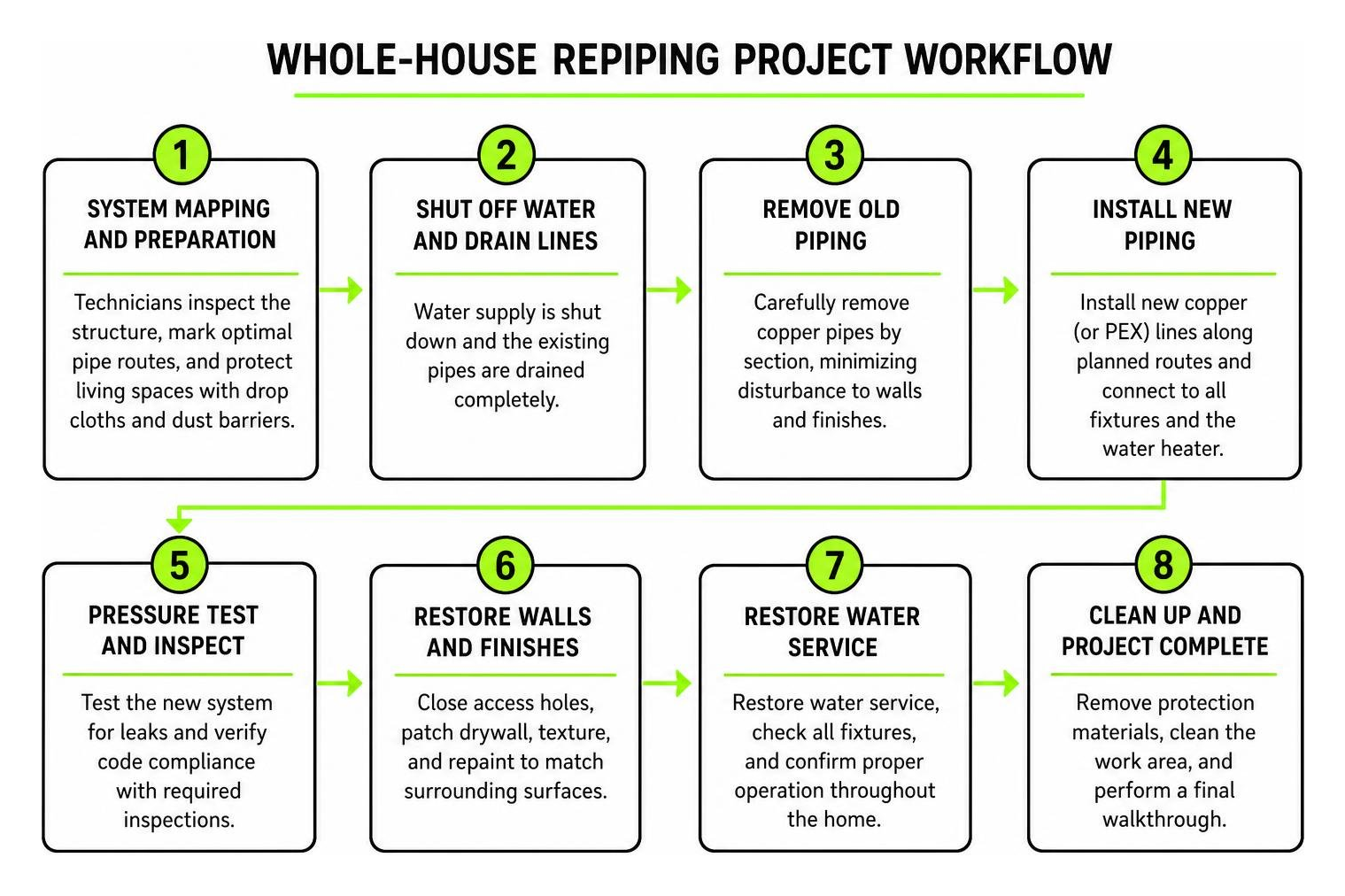
The repiping process follows an organized, step-by-step workflow:
- System Mapping and Preparation: Technicians inspect the structure, mark optimal pipe routes, lay drop cloths along all walkways, and protect living spaces with plastic dust barriers.
- Strategic Wall Openings: Installers cut small, rectangular access panels into drywall behind sinks, toilets, and fixtures, targeting hidden wall cavities rather than opening entire walls.
- Plumbing Installation: New PEX or copper supply lines are routed through structural bays and secured with insulated clamps to prevent pipe rattle and water hammer.
- System Cutover: Water service is temporarily shut off for approximately 5 to 7 hours on the day of the system transition, allowing plumbers to disconnect the old piping, hook up the new lines, and install brand-new quarter-turn shutoff valves at every fixture.
- Hydrostatic Pressure Testing: The new plumbing network is pressurized and monitored under strict pressure thresholds to verify joint integrity before closing wall cavities.
- Municipal Code Inspection: A municipal building inspector reviews the rough-in installation to verify compliance with local safety and plumbing standards.
- Drywall Repair and Cleanup: Specialized technicians patch, tape, texture, and paint all drywall openings, leaving the living areas clean and fully restored.
Frequently Asked Questions About Pipe Replacement
How long do copper plumbing pipes typically last?
Under standard operating conditions with neutral water chemistry, properly installed Type L copper pipes last 50 to 70 years or more. Thinner Type M copper, often installed in budget construction during past decades, has a shorter lifespan of 25 to 40 years. Highly acidic water (pH under 6.5), hard mineral scaling, stray electrical currents, or excessive water velocity above 8 feet per second can cause premature failure in as little as 15 to 20 years.
Can a single pinhole leak be repaired without repiping the entire house?
Yes. An isolated pinhole leak can be repaired quickly by cutting out the compromised section and installing a copper slip coupling, soldering a new segment, or using an approved push-fit fitting. A spot repair is appropriate if the surrounding pipe walls remain thick and free of widespread verdigris. If your system experiences multiple pinhole leaks across different rooms, it indicates systemic internal corrosion, making full replacement the safer, more economical long-term choice.
How long will water service be turned off during a repipe?
During a multi-day repipe, you will not be left without water overnight. Installers run the new plumbing lines parallel to your existing, active copper system while the old pipes remain pressurized. Water service is typically shut off for only 5 to 7 hours on a single day to complete the final cutover and connect the fixtures to the new distribution lines.
Conclusion
Addressing failing water lines protects your home against structural water damage, mold contamination, and unexpected emergency expenses. Whether you need a simple copper spot repair, a slab-leak reroute, or a complete whole-house repiping project using modern PEX tubing, understanding your material options and installation requirements ensures your water system remains clean, efficient, and durable for decades to come.
About the Author: Rob Humm is the co-owner of Fusion One Marketing, a full-service digital agency focused on helping home service businesses grow. If you run a plumbing, HVAC, or specialty trade company and want to expand your reach, discover how our team drives results through targeted digital marketing for home service contractors.