

How to Choose an Online Marketing Agency You Can Trust
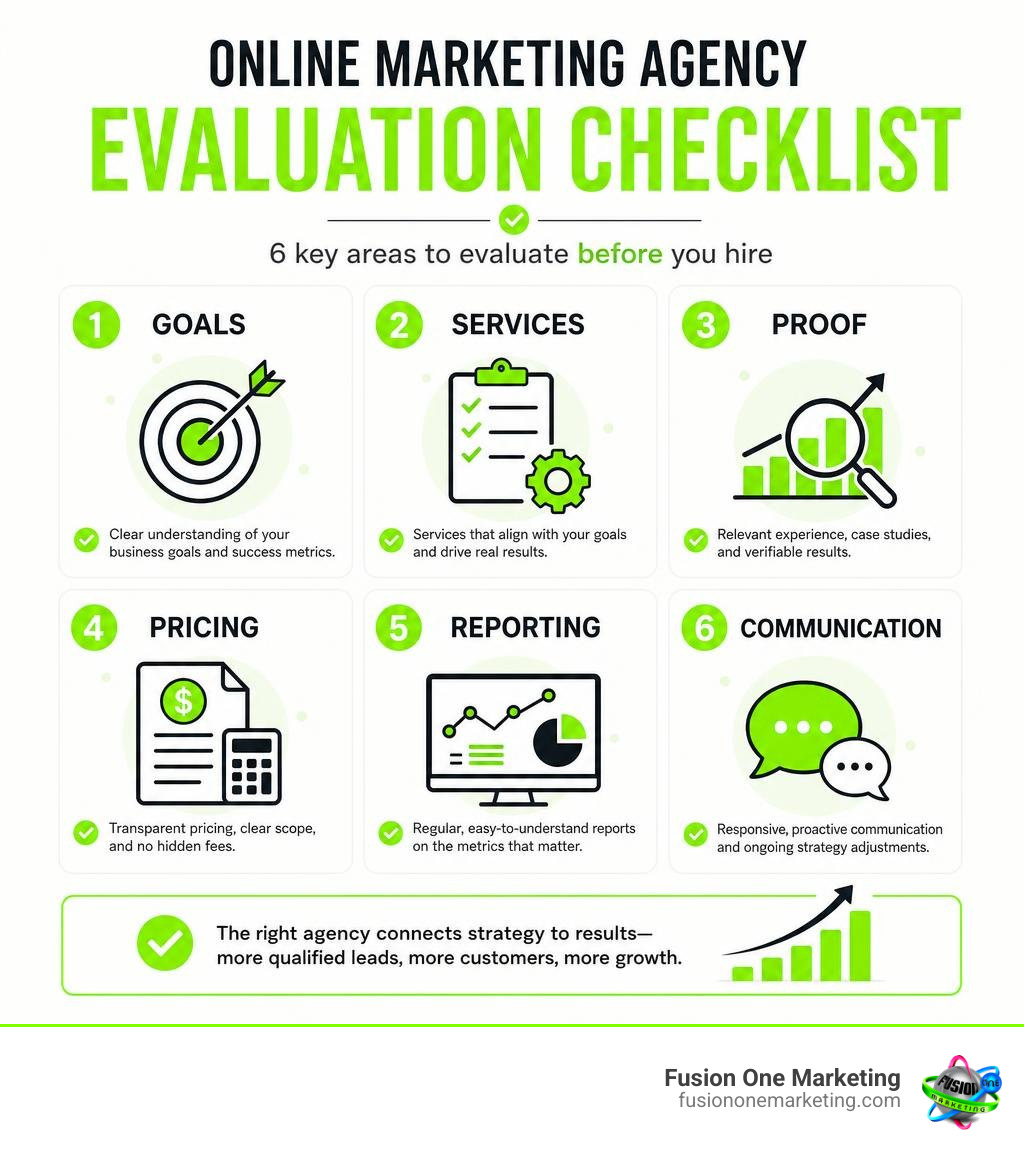
A reliable online marketing agency should help your business generate measurable leads, not bury you in confusing reports. Before you hire one, make sure it can:
- Explain which services will support your goals, such as local SEO, Google Ads, website improvements, or content.
- Set clear expectations for cost, timelines, and the metrics it will report.
- Show relevant experience with businesses like yours and explain how it tracks calls, form leads, booked jobs, and revenue.
- Communicate regularly and adjust the plan when search algorithms, ad costs, or customer behavior change.
For a home service business, the right partner connects marketing activity to a practical outcome: more qualified local customers calling, requesting estimates, and booking work. This matters because organic search accounts for a major share of website traffic, while generating traffic and leads remains a leading challenge for marketers.
Hiring an agency is not about finding the biggest list of services or the lowest monthly price. It is about finding a team with a focused strategy, honest reporting, and the ability to improve results over time.
I am Rob Humm, an owner of Fusion One Marketing and a digital marketer since 2011. I help local businesses evaluate and use an online marketing agency strategy that improves local visibility, paid advertising results, and lead generation as search continues to change.
Core Services to Expect from an Online Marketing Agency
When you explore hiring an agency in 2026, you will quickly notice how crowded the industry has become. Over 90% of businesses use digital channels to reach consumers. At the same time, 61% of marketers state that generating steady traffic and high-intent leads remains their single biggest operational challenge.
To solve this problem, a high-performing partner should provide comprehensive strategic alignment across multiple channels. Instead of piecemeal tactics, your partner should integrate paid campaigns, organic visibility, web design, and conversion tracking into a unified engine. At Fusion One Marketing, our all-in-one “Digital Domination” program bundles these critical channels so home service companies—such as HVAC contractors, plumbers, roofers, and landscapers across Birmingham, Huntsville, and Helena, Alabama—can capture demand at every stage of the customer journey.
A complete strategy relies on understanding the power of SEO for business success while capturing immediate customer demand through the power of pay-per-click advertising.
Search Engine Optimization and Content Strategy
BrightEdge data reveals that 53% of all trackable website traffic originates from organic search. When a homeowner’s air conditioner breaks down in the Alabama summer, they do not casually scroll social media; they turn to Google search.
A seasoned agency builds organic visibility through:
- Technical SEO: Improving site crawlability, indexation, schema markup, and Core Web Vitals to provide a seamless technical foundation.
- Localized Keyword Targeting: Optimizing Google Business Profiles and local landing pages for high-intent searches like “emergency plumbing repair in Birmingham AL” or “commercial HVAC services in Huntsville AL.”
- Helpful Content Creation: Producing clear educational content and knowing how to create SEO-friendly content that ranks to answer real customer questions, establish local authority, and boost overall domain strength.
High-Converting Web Design and Landing Pages
Driving traffic to an outdated or sluggish website wastes ad spend and organic visibility. Your website is your primary 24/7 digital storefront.
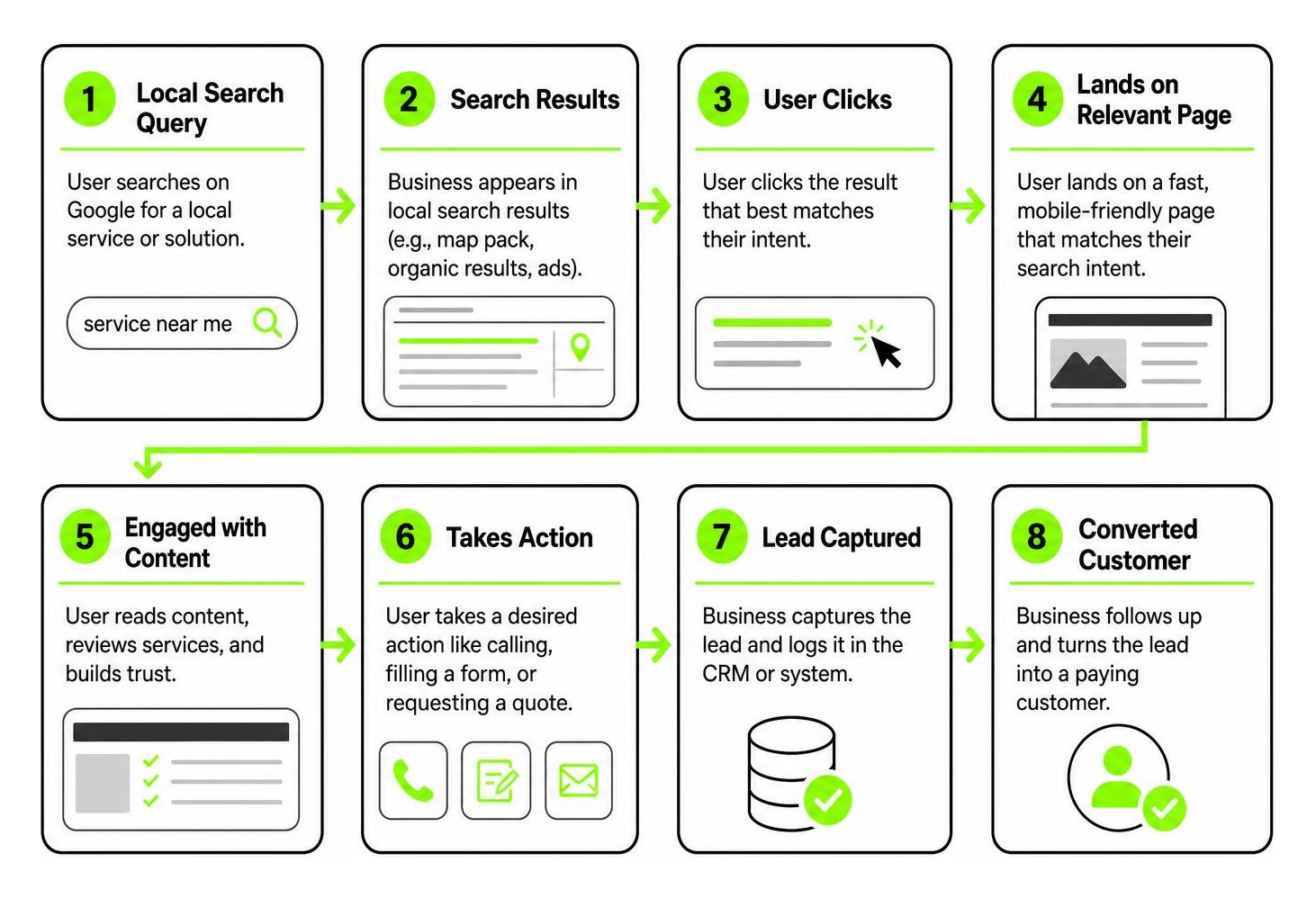
Modern agencies focus heavily on the importance of mobile-friendly website design because the vast majority of local service inquiries happen on smartphones.
Beyond aesthetics, your agency should apply structured understanding conversion rate optimization principles, including fast loading times, click-to-call buttons, trust badges, and direct contact forms. When pairing paid search with specialized campaigns, creating effective landing pages for conversion ensures that visitors who click your ads take direct action rather than bouncing away.
Evaluating Agency Pricing Models and Budget Alignment
Choosing an agency requires understanding how agencies structure their fees. Marketing investments should produce an attractive return, not feel like an ambiguous line item on an expense report.
Local businesses typically allocate between 5% and 10% of their gross revenue toward marketing to maintain and grow market share, while enterprise organizations targeting aggressive expansion often allocate around 14%. How that budget is managed depends on the agency’s billing structure.
| Pricing Model | How It Works | Best Suited For | Key Considerations |
|---|---|---|---|
| Monthly Retainer | A flat monthly fee covering an agreed-upon scope of ongoing work (SEO, PPC management, content). | Consistent, long-term multi-channel growth. | Provides budget predictability and allows continuous iterative improvements. |
| Project-Based | A fixed one-time fee for a specific deliverable (e.g., website redesign). | Clear-cut, short-term needs with distinct start and finish dates. | Scope creep can trigger additional charges if project goals are not defined upfront. |
| Hourly Rate | Billing based on the direct hours logged by agency staff. | Technical consulting, ad-hoc web development, or minor audits. | Unpredictable monthly costs and misaligned incentives regarding efficiency. |
| Performance-Based | Agency fees tied directly to generated leads, closed deals, or revenue share. | Established brands with proven high-converting sales funnels. | Requires total alignment on lead qualification and sophisticated tracking attribution. |
Transparent Retainer vs Performance Pricing in an Online Marketing Agency
Retainers remain the industry gold standard because effective digital marketing requires consistent, uninterrupted work. However, retainers must come with transparent scope parameters and clear deliverables.
An agency should spell out exactly what happens each month: how many technical optimizations are deployed, which campaigns are adjusted, how ad budgets are split, and what performance milestones are targeted. This transparency eliminates surprise fees and ensures both sides work toward common business goals.
Critical Criteria for Vetting Potential Partners
Hiring a team requires evaluating their operational systems, reporting transparency, and direct industry track record.

A capable agency leverages modern infrastructure to save time and capture opportunities, utilizing the benefits of marketing automation tools to trigger instant SMS review requests, route inbound phone calls, and nurture warm leads.
Vetting Experience and Case Studies with an Online Marketing Agency
Look for verified case studies within your industry or a closely related vertical. Ask direct questions:
- Can you demonstrate sustained lead growth for local businesses in competitive markets?
- What is your average client retention rate? (High-retention agencies show that their strategies work over the long haul.)
- How do you track and verify return on ad spend (ROAS) and cost per acquisition (CPA)?
- Can you provide references from current clients?
Strategic Execution and Ongoing Optimization
Search engines, social media algorithms, and paid advertising networks update constantly. A strategy that worked twelve months ago must adapt to new local search ranking factors and automated bidding mechanics.
A reputable agency understands why digital marketing is not a one-time project. They hold scheduled strategy reviews, monitor core performance metrics weekly, conduct conversion tracking audits, and implement strategic pivots whenever competitive landscapes change.
Red Flags and Mistakes to Avoid During Selection
Knowing what to steer clear of is just as critical as knowing what to look for. As outlined in our guide on common digital marketing mistakes and how to avoid them, businesses frequently fall into expensive traps when vetting providers.
Be vigilant for these warning signs:
- Guaranteed #1 Google Rankings: No agency controls Google’s algorithm. Guarantees of immediate top positioning usually indicate risky “black-hat” shortcuts that trigger search penalties.
- Proprietary Platform Lock-In: You should always own your website domain, your Google Business Profile, your analytics data, and your advertising accounts. Avoid agencies that build assets in proprietary software you cannot take with you if you part ways.
- Obsession with Vanity Metrics: High impressions, clicks, and page views mean nothing if the phone is not ringing with qualified potential customers.
- Lack of Direct Communication: If your agency assigns you to an inexperienced intern or hides behind automated ticket systems without accessible account managers, communication will inevitably break down.
For more information on selecting the right team, consult our in-depth guide to finding a reliable web marketing agency.
Frequently Asked Questions About Hiring an Agency
How much should a local or mid-sized business budget for marketing?
For established home service companies and local businesses, allocating 5% to 10% of gross revenue toward digital marketing is standard. If you are launching a new division, entering a new service area, or seeking aggressive market expansion, budgeting 10% to 14% allows for greater paid advertising volume and rapid asset development.
How long does it take to see measurable results from marketing campaigns?
Pay-per-click advertising, Local Services Ads, and paid social campaigns can generate inbound phone inquiries within days of launch. Search engine optimization and organic content strategies typically take 3 to 6 months of steady optimization to build domain authority, secure localized map rankings, and produce compounding inbound lead volume.
What metrics matter most when reviewing agency performance reports?
While clicks and keyword positions provide helpful diagnostic insight, bottom-line metrics matter most:
- Inbound Lead Volume: Tracked phone calls, contact form submissions, and direct estimate bookings.
- Cost Per Acquisition (CPA): How much marketing spend is required to generate a qualified lead or paying customer.
- Return on Ad Spend (ROAS): Direct revenue generated compared to your advertising investment.
- Conversion Rate: The percentage of website and landing page visitors who take meaningful action.
Conclusion
Finding the right marketing partner changes the trajectory of your business. When you partner with an agency that combines technical proficiency, market transparency, and hands-on service, marketing stops feeling like an unpredictable expense and transforms into a dependable growth driver.
At Fusion One Marketing, we help home services and local businesses across Birmingham, Huntsville, and Helena dominate their local markets with our all-in-one digital marketing programs. If you are ready to stop guessing and start scaling, partner with an experienced marketing team to grow your business.