
What Is a Landing Page, and Why Does It Matter?
A landing page is a web page built to get visitors to take one specific action, such as requesting a quote or booking a service. Unlike a homepage, which helps people explore a business, a landing page keeps the focus on one offer and one next step.
If you run ads for your home service business, the page visitors reach should match what the ad promised. A clear headline, a short form, and a visible call to action can help turn those clicks into leads. This guide covers when to use a landing page, what to put on it, and how to tell if it is working.
I’m Rob Humm, an owner of Fusion One Marketing, and I’ve worked in digital marketing since 2011. My work in local search and pay-per-click advertising has shown me why a landing page needs a clear goal and a way to measure results.
What Is a Landing Page and How Does It Work?
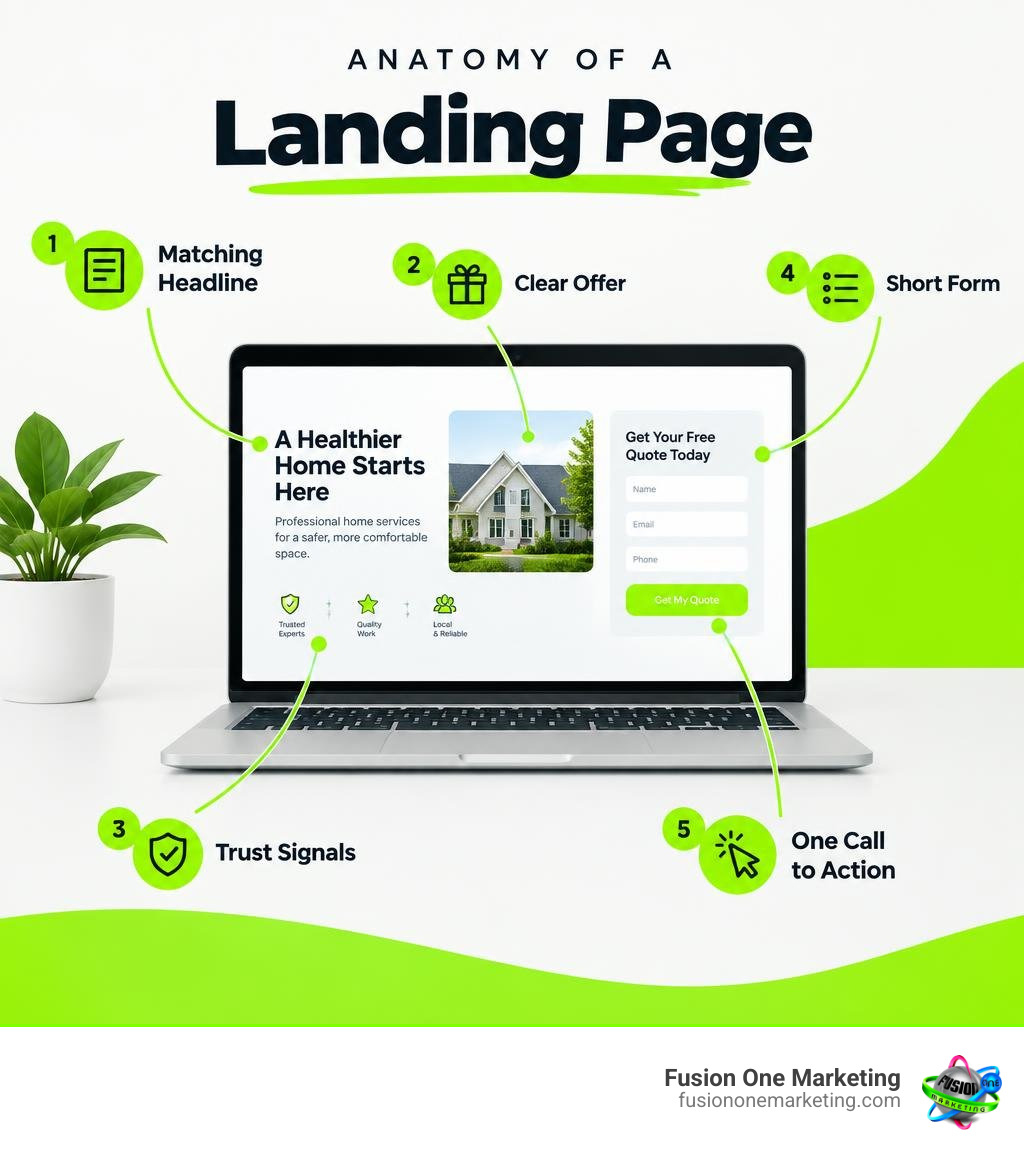
In digital marketing, a landing page serves as a standalone destination designed specifically to receive inbound traffic from paid advertising, email marketing campaigns, social media promotions, or targeted search queries. While traditional web pages invite visitors to explore multiple topics, a dedicated campaign page removes competing choices so the user follows a single, uninterrupted conversion path.
When a potential customer clicks your promotional link, they arrive with specific visitor intent. If an HVAC company runs a campaign offering a discount on seasonal tune-ups, sending that traffic to a general homepage forces visitors to dig through unrelated service menus, company bios, and blog posts. By directing them to a focused page built around that exact promotion, you align the message directly with their intent. Understanding what makes a good homepage is essential for broad brand discovery, but closing ad-driven deals requires a streamlined environment that converts interest into immediate lead capture.
Dedicated Landing Page vs. Multi-Page Website
The core difference between a dedicated campaign page and a multi-page website lies in how navigation and options are presented to the visitor. Websites encourage wide exploration with headers, footers, sidebars, and internal links. Landing pages eliminate those elements to minimize browsing friction and prevent bounce rates caused by decision fatigue.
| Feature / Criteria | Dedicated Landing Page | Multi-Page Website / Homepage |
|---|---|---|
| Primary Objective | Drive a single conversion action (call, form, buy) | Introduce the brand, educate, and encourage exploration |
| Navigation Menus | Removed or strictly minimized to avoid distraction | Fully accessible with multi-level dropdowns and footers |
| Traffic Sources | PPC ads, email blasts, paid social, targeted promos | Organic search, direct traffic, referral links, social profiles |
| Content Scope | Hyper-focused on a single offer or service | Broad overview covering all services, team bios, and company info |
| Conversion Focus | High (one prominent CTA above the fold) | Diffused across multiple secondary calls to action |
When comparing a landing page vs. website, the distinction becomes clear: websites are your digital storefront, while landing pages are your dedicated sales closers.
When Dedicated Pages Are Essential vs. Unnecessary
Dedicated campaign pages are essential whenever you have a measurable, single-action goal tied to marketing spend or targeted outreach. They are indispensable for:
- Paid search and social ads: Directing ad spend to general pages wastes budget. Dedicated destinations keep prospects focused on what made them click.
- Product or service launches: Introducing a new offering requires dedicated real estate to explain benefits without distractions.
- Lead magnets and gated assets: Delivering ebooks, checklists, or whitepapers in exchange for contact information.
- Event registrations and webinars: Capturing RSVPs for time-sensitive virtual or in-person sessions.
- Targeted local promotions: Running localized campaigns across service areas like Birmingham, AL, Huntsville, AL, or Helena, AL.
Conversely, a dedicated destination page is unnecessary when your primary goal is broad organic exploration, brand education, or when you lack a defined call to action. If a visitor simply wants to browse your portfolio, learn your company history, or read industry news, sending them to a locked-down sales page creates frustration rather than engagement.
Essential Elements of High-Converting Digital Campaigns
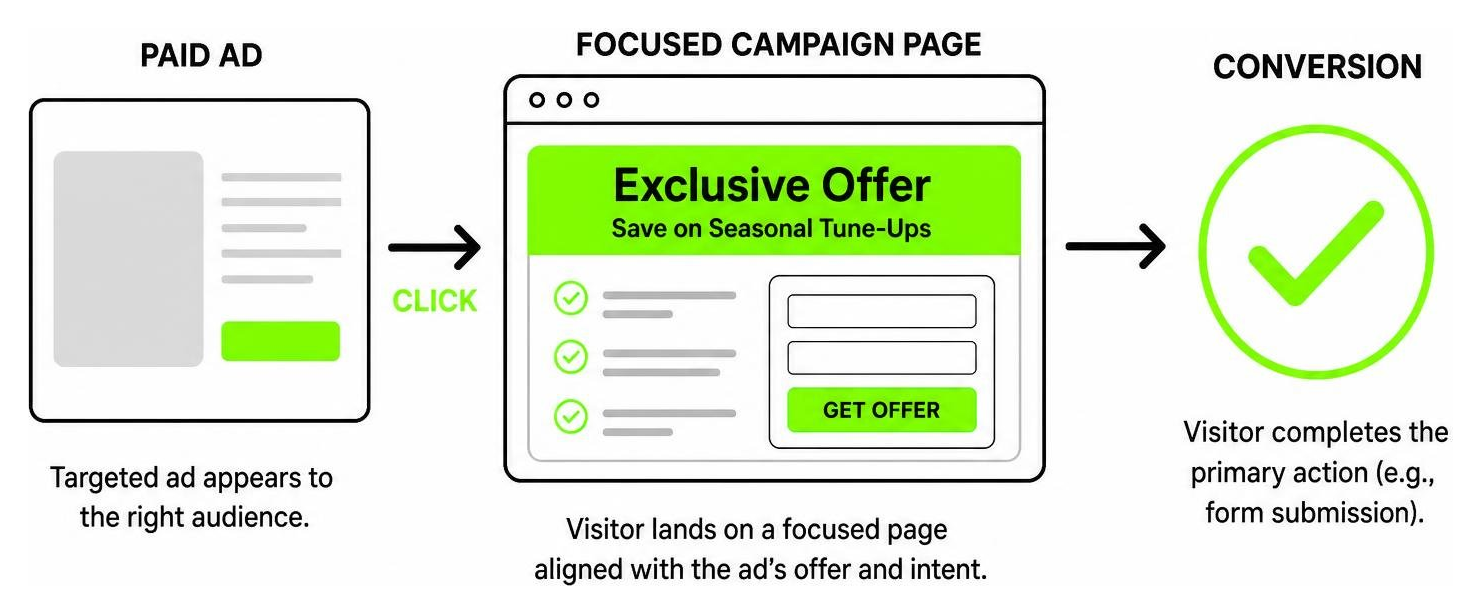
Every successful campaign destination relies on a proven visual and functional architecture. When building 5 proven components for high ROI landing pages, the layout must answer three critical questions within five seconds: What are you offering? How does it help me? What do I do next?

Key Anatomy of a High-ROI Landing Page
To maximize ROI, your page layout should incorporate these foundational elements:
- Benefit-Driven Headline and Subheading: Your headline must immediately communicate the core value proposition. In our testing, simple headline adjustments have lifted conversion rates by 22%.
- Hero Section Media: Use authentic photography or engaging video. Incorporating relevant video on a campaign destination can push conversion rates up by as much as 86%.
- High-Contrast Call to Action (CTA): Your primary button should visually stand out from the background palette, using clear, action-oriented text such as “Schedule Your Free Inspection” rather than generic labels like “Submit.”
- Frictionless Lead Forms: Keep form fields limited to essential information. Reducing unnecessary fields lowers visitor resistance and boosts completion rates.
- Prominent Social Proof and Trust Badges: Display authentic customer reviews, industry accreditations, licenses, and verified ratings near the CTA to reduce perceived risk.
- Directional Cues: Use visual hierarchy, whitespace, and subtle design cues (such as arrows or eye-line direction in imagery) to guide the user’s focus straight to the conversion goal. Modern digital teams often design these interactive layouts using collaborative tools like the Figma design platform before writing a single line of code.
Matching Campaign Intent to User Expectations
A high conversion rate depends heavily on message match. When an ad promises “Same-Day Emergency AC Repair,” the landing page hero headline must mirror that phrasing verbatim. If the visitor lands on a page that vaguely reads “Quality Heating and Cooling Services,” doubt creeps in, and they bounce.
Marketers frequently use tools like ChatGPT conversational AI to brainstorm tailored headline variations that align tightly with specific ad copy. For e-commerce or paid service bookings, integrating seamless transaction infrastructure like Stripe payment infrastructure ensures checkout flows remain secure and effortless.
Ensuring that you are sending people to the right place protects your ad spend and maximizes lead quality.
Strategic Frameworks for Maximum Conversion Rates
Achieving consistent results requires applying structured frameworks to page development, user experience, and technical implementation. Mastering the process of creating effective landing pages for conversion ensures every marketing dollar works harder.
Setting SMART Conversion Goals
Every page you deploy must be built around a SMART objective:
- Specific: Target one precise outcome, such as booked furnace tune-ups or downloaded pricing guides.
- Measurable: Define clear numerical metrics (e.g., achieving an 8% submission rate).
- Attainable: Set realistic benchmarks based on channel averages and historical performance.
- Relevant: Ensure the offer aligns with your core business services and audience needs.
- Time-Bound: Establish a clear campaign timeframe or incorporate limited-time promotional urgency.
Adding time-sensitive elements, such as seasonal booking deadlines or countdown timers, motivates prospects to act immediately rather than delaying their decision.
Distraction-Free Layouts and Visual Hierarchy
To prevent visitor drop-off, optimize your visual hierarchy through deliberate layout choices:
- Strip away top navigation bars, category menus, and footer site maps so visitors cannot wander away from the core offer.
- Keep the primary value proposition, form, or key CTA visible above the fold on both desktop and mobile viewports.
- Utilize generous whitespace around copy blocks and call-to-action buttons to draw visual attention directly to conversion elements.
- Structure body content with scannable bullet points, bold keywords, and concise paragraphs that highlight key benefits.
- Prioritize technical page performance. Maintaining a page load speed between 1 to 3 seconds prevents severe drop-offs, as each additional second of delay can reduce conversions by up to 7%.
- Apply strategic search indexing: add
noindexdirectives for short-term PPC campaigns to avoid duplicate content flags, while allowing dedicated, long-term local SEO landing pages to be fully indexed.
Measuring Performance and Running Experimentation Loops
Launching your campaign is only the first step. Ongoing success relies on continuous tracking and optimization. Understanding conversion rate optimization allows you to make informed improvements rather than relying on guesswork.
Analytics, Heatmaps, and A/B Testing Protocols
Marketers who rely on data-driven approaches see a 35% increase in test impact. To isolate what truly resonates with your audience, run structured split tests where you alter only one variable at a time—such as testing a video against a static hero image, altering your primary headline, or simplifying a form from five fields down to three.
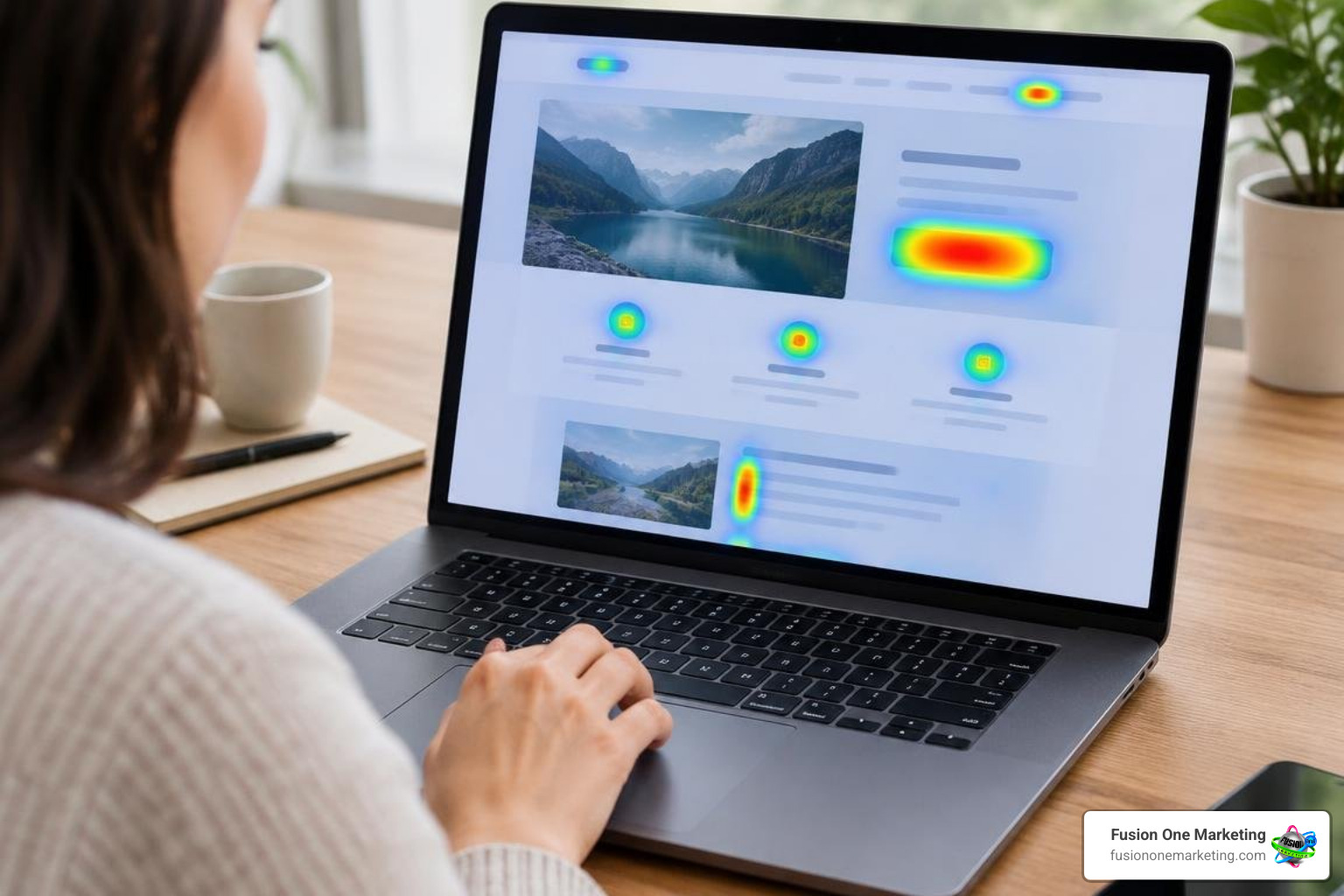
Across the digital marketing landscape, roughly 12% of tested ideas prove to be clear winners that deliver permanent conversion gains. Employing heatmaps and session recordings lets you observe scroll depth, identify where visitors hesitate, and uncover navigation bottlenecks. By tracking conversion baselines and iterating methodically, you systematically lower your cost per lead.
Frequently Asked Questions About Conversion Funnels
What is the primary difference between a landing page and a standard website page?
A standard website page contains comprehensive navigation menus, multiple internal links, and broad information meant for browsing. A landing page is a standalone page built without external navigation, designed solely to guide traffic from a specific campaign toward completing one specific action.
Should marketing landing pages be indexed by search engines?
It depends on the campaign’s lifespan and objective. Temporary PPC landing pages, seasonal promotions, and gated lead magnet pages should include a noindex meta tag to prevent search engine indexing and avoid duplicate content issues. Permanent, search-optimized pages designed to capture organic search traffic for specific regional services should remain indexable with appropriate canonical tags.
How many form fields should be included to maximize conversions?
As a general rule, use the minimum number of fields required to qualify and contact the lead—typically name, email, and phone number. While longer forms can help filter lead quality for complex, high-ticket services, every additional field introduces friction that reduces overall completion rates.
Conclusion
Maximizing campaign performance requires aligning every element of your digital strategy—from the initial ad copy to the final conversion step. By removing distractions, setting SMART campaign objectives, maintaining strict message match, and testing layout variations, you turn casual clicks into measurable revenue. At Fusion One Marketing, our all-in-one “Digital Domination” program integrates SEO, custom web architecture, targeted social campaigns, and PPC advertising to deliver transparent, scalable growth for home service contractors and businesses across Birmingham, Huntsville, and Helena, AL. Discover the ideal balance for your business growth by exploring our landing page vs. website guide to refine your digital conversion strategy today.